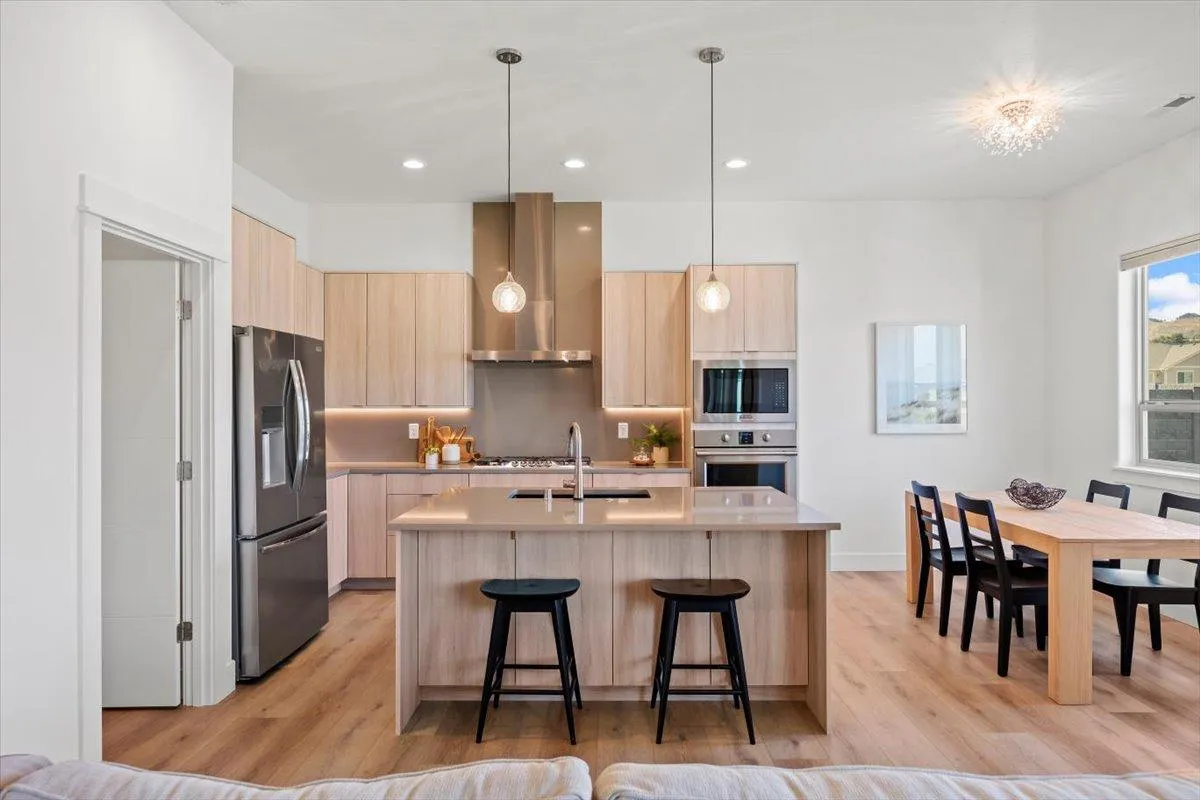
How to Sell and Buy at the Same Time in Tri-Cities, WA
How to Sell and Buy at the Same Time in Tri-Cities, WA
Selling your current home and buying the next one at the same time sounds simple until you start thinking through the details.
You need the money from your sale.
But you also need somewhere to go.
You don’t want to sell too fast and feel rushed into the wrong house. You also don’t want to buy first and carry too much financial pressure. And if you have kids, pets, work schedules, belongings, inspections, appraisals, repairs, timelines, and moving trucks involved, the whole thing can start to feel like a puzzle with too many moving pieces.
That’s why many homeowners in Tri-Cities, Washington stay stuck longer than they need to.
They know their current home no longer fits, but the transition feels risky.
The good news is that selling and buying at the same time can be done well. It just needs a clear plan before you list.
The safest way to sell and buy at the same time in Tri-Cities is to know your current home value first, understand your buying power, choose the right sequencing strategy, and build your sale around your next move instead of treating both transactions separately.
That is where most people go wrong.
They think the sale is one decision and the purchase is another.
In reality, they are connected.
Kim Feliciano is a Tri-Cities, WA Realtor® helping buyers and sellers navigate the housing market in Richland, Kennewick, Pasco, West Richland, and Benton City.
Start With the Real Question: Can This Move Actually Work?
Before you think about listing photos, repairs, or touring homes, you need to answer the real question:
Can I sell this home, buy the next one, and still feel financially comfortable after everything is done?
That starts with your current home value.
Not a guess. Not a Zestimate. Not what your neighbor sold for. A realistic local value range based on your home’s condition, location, price point, and current buyer demand.
This is where your first step should be simple:
Click here to to get a current home value baseline
That does not mean you have to list.
It means you get the number you need before making bigger decisions.
For many homeowners, this step brings relief because it replaces vague stress with actual math.
Why Your Home Value Comes First
When you are selling and buying at the same time, your home value affects almost every other decision.
It affects how much equity you may have.
It affects how much cash you may be able to use toward the next home.
It affects whether you can buy first, sell first, or need both closings coordinated.
It affects whether you can make a stronger offer on the next home.
It affects how much risk you can comfortably take on.
Without that number, you are guessing.
And guessing is what makes this process feel stressful.
A homeowner in Richland with strong equity and a move-in-ready home may have a very different strategy than a homeowner in Kennewick who needs to sell before qualifying for the next purchase. A seller in Pasco, West Richland, or Benton City may have different timing, buyer demand, and property-type considerations.
That is why the plan needs to be local.
The Three Main Ways to Sell and Buy at the Same Time
Most people fall into one of three paths.
You can sell first, buy first, or coordinate both transactions at the same time.
Each option has trade-offs.
Option 1: Sell First, Then Buy
Selling first is often the cleanest financial option.
You sell your current home, know exactly how much cash you have, and then buy your next home with more certainty.
The benefit is clarity.
You know your proceeds. You reduce the risk of carrying two homes. You may be in a stronger position financially once your home sells.
The challenge is housing.
If you sell first, you need a plan for where you will live between homes. That may mean a rent-back agreement, temporary housing, staying with someone short term, or negotiating a closing timeline that gives you room to find the next place.
This option works best when financial certainty matters more than convenience.
It can be a good fit if you need the sale proceeds to buy, want to avoid two payments, or want to know your exact numbers before committing to the next home.
Option 2: Buy First, Then Sell
Buying first gives you the most control over where you go next.
You find the right home, move once, then sell your current home after.
That sounds ideal, but it only works if the financial side supports it.
You may need to qualify while still owning your current home. You may need enough cash for the down payment without using sale proceeds. You may need a bridge loan, HELOC, recast strategy, or other financing option.
The benefit is convenience.
You avoid temporary housing. You avoid rushing into a purchase. You can move into the next home before preparing the old one for showings.
The challenge is carrying risk.
If your current home takes longer to sell than expected, you may be carrying two homes longer than planned.
This option works best when you have strong equity, cash flexibility, or lending options that allow you to buy before selling without creating pressure.
Option 3: Sell and Buy With Coordinated Closings
This is the path many Tri-Cities homeowners imagine.
You list your current home, accept an offer, find your next home, and coordinate both closings so the sale funds the purchase.
It can work.
But it requires more precision.
Your listing strategy, buyer’s financing, inspection timelines, appraisal, seller agreement on the next home, and closing dates all need to line up closely.
The benefit is efficiency.
You reduce the need for temporary housing and avoid carrying two homes.
The challenge is complexity.
A delay on one side can affect the other. That is why you need strong communication, realistic timelines, and a backup plan.
This option works best when your current home is likely to sell in a predictable window and you are willing to make decisions quickly once the right next home appears.
The Biggest Mistake: Looking for the Next Home Before Knowing Your Sale Plan
A lot of homeowners start by browsing homes online.
That feels productive, but it can create stress fast.
You find a house you like.
Then you wonder if you can buy it.
Then you wonder what your house would sell for.
Then you wonder if you should list.
Then you realize you are emotionally attached to a home before you know whether the move even works.
That is backwards.
The smarter order is:
First, understand your current home value.
Second, talk through your financing options.
Third, decide whether you are selling first, buying first, or coordinating both.
Then start looking seriously at the next home.
That order protects you from falling in love with a house before the math is clear.
What to Know Before You List Your Current Home
If your current home needs to sell in order for you to buy, your listing strategy matters more than usual.
You are not just trying to sell.
You are trying to create a clean transition.
That means you need to know how your home is likely to perform before it hits the market.
Will buyers see it as move-in ready?
Will repairs become an issue?
Is it priced in a range with strong demand?
Are there competing homes nearby?
Would a few small prep items improve the outcome?
If your home sits longer than expected, your next purchase may get delayed. If your home attracts the right buyer quickly, you may have more leverage to coordinate timing.
This is why preparation matters.
Not perfection.
Preparation.
The Role of Rent-Back Agreements
A rent-back can be a useful tool when selling and buying at the same time.
A rent-back allows you to sell your home, close the transaction, and stay in the home for an agreed period after closing.
This can give you time to close on your next home or move without rushing.
It is not guaranteed. The buyer has to agree to it. Their loan type and comfort level may affect what is possible. The terms need to be clear.
But when used correctly, a rent-back can reduce pressure.
For many homeowners, this is one of the most practical tools in a simultaneous sale and purchase.
The Role of Contingent Offers
A contingent offer means your purchase depends on your current home selling.
This can protect you, but it can also make your offer less attractive to the seller of the home you want to buy.
Whether a contingent offer works depends on the market, the home, the seller’s motivation, and how strong your current listing position is.
If your home is already under contract with solid terms, your contingent offer may feel stronger.
If your home is not listed yet, or is listed but not getting traction, the seller may be hesitant.
This is why the order matters.
A strong sale plan can make your purchase offer stronger.
A vague sale plan can weaken it.
Financing Options to Ask About
This is where a good lender matters.
Depending on your situation, you may be able to explore options like a bridge loan, home equity line of credit, recasting after sale, temporary buy-before-you-sell options, or using reserves to qualify.
Not every option is right for every person.
Some create flexibility. Some create risk. Some sound good until you see the payment. Some require strong equity or credit.
The point is not to pick a financing strategy from an article.
The point is to know that you may have options.
Before you assume you must sell first, or before you assume you can buy first, talk with a lender who understands simultaneous buy-sell scenarios.
What If You Need the Equity From Your Current Home?
This is common.
Many homeowners need the equity from their current home to buy the next one.
That does not mean the move is impossible.
It means the strategy needs to be tighter.
You may need to sell first and negotiate a rent-back. You may need to get under contract on your current home before making offers. You may need to write a contingent offer. You may need to coordinate closing dates.
This is where the right plan can save you a lot of stress.
The key is knowing your numbers early.
Start with your current home value here.
That gives you the baseline before deciding what kind of purchase strategy makes sense.
What If You’re Moving Up?
Move-up buyers usually have a specific kind of pressure.
They are not just selling to sell.
They are trying to solve a lifestyle problem.
Maybe the current home feels too small. Maybe the layout no longer works. Maybe they want a different location, more space, less maintenance, a better setup for work, or a home that fits this next stage of life.
The hard part is that move-up buyers often have to balance emotion and math.
They want the next house to feel worth the effort.
That makes sense.
If you are going to sell, pack, move, and take on a new payment, the new home needs to solve the right problem.
This is where clarity matters.
What are you actually trying to improve?
Space? Location? Layout? Yard? Maintenance? Convenience? Monthly comfort? Long-term fit?
If you do not know that, it is easy to chase homes that look good but do not solve the real issue.
What If You’re Downsizing?
Downsizing creates a different set of decisions.
The current home may have too much space, too much maintenance, or too much unused square footage.
But downsizing is not always simple emotionally.
You may be leaving a home with history. You may be sorting through years of belongings. You may want simplicity, but not regret. You may want less maintenance, but not a home that feels too small.
The financial side can be strong if you have equity, but the timing still matters.
Downsizers often benefit from a slower, more controlled plan.
That may mean getting a value baseline months before listing, deciding what to keep, understanding what smaller homes or lower-maintenance options actually cost, and only then choosing the sale timeline.
How to Avoid Feeling Rushed
The best way to avoid feeling rushed is to make decisions before the market forces you to.
That means knowing your home value before you are ready to list.
It means getting lender clarity before you find a house you love.
It means preparing your current home before you need it to go live.
It means knowing your non-negotiables before you start touring.
Most stress in a simultaneous sale and purchase comes from unclear sequencing.
When the order is clear, the stress drops.
You may still have moving parts, but you are not making every decision under pressure.
A Practical Step-by-Step Plan
Here is the clean version of how I would approach selling and buying at the same time in Tri-Cities.
Start with your home value get a baseline for what your current home may be worth.
Then talk with a lender about what you can do before and after selling. Do not assume you know your options until you see the numbers.
Next, decide your sequencing strategy. Are you selling first, buying first, or trying to coordinate both?
After that, prepare your current home based on what will actually affect buyer confidence. You do not need to fix everything. You need to fix the things that create doubt.
Then start watching the market for the next home, but do not get emotionally attached until the sale plan is clear.
Once your current home is ready, list with a strategy that supports your next move. That includes pricing, timing, negotiation terms, and possible rent-back needs.
When you find the next home, write an offer that reflects your real position. If your home is under contract, that is a different conversation than if it is not listed yet.
Finally, keep a backup plan. Even strong deals can hit delays. The smoother you want this to feel, the more important it is to plan for what happens if timing shifts.
What This Looks Like in Real Life
Let’s say you own a home in Kennewick and want to move into a home in Richland or West Richland.
You need the equity from your current home for the down payment.
In that case, listing first may make the most sense. But instead of listing without a plan, you could prepare the home, price it well, negotiate a rent-back, and then use the accepted offer to strengthen your next purchase.
That gives you more clarity than trying to buy before you know what your current home will sell for.
Now let’s say you own a home in Richland with strong equity and can qualify without selling first.
In that case, buying first may be possible. You could secure the next home, move, then prepare your current home for sale without dealing with showings while you live there.
That may create a calmer process, but only if the numbers work.
The right answer depends on the homeowner, not the city.
Common Mistakes to Avoid
The first mistake is assuming you have to do it one specific way.
You may have more options than you think.
The second mistake is waiting too long to get your current home value.
Without that number, every other decision is foggy.
The third mistake is shopping before you know your financing path.
That is how people fall in love with homes they are not positioned to buy.
The fourth mistake is overpricing your current home because you need a certain amount for the next one.
The market does not care what you need. It responds to value.
The fifth mistake is having no backup plan.
When two transactions are connected, small delays can create big stress. Planning ahead matters.
Final Take: How to Sell and Buy at the Same Time in Tri-Cities, WA
Selling and buying at the same time in Tri-Cities is not something you want to wing.
It can absolutely work.
But it needs to be planned in the right order.
The first step is not touring homes.
The first step is knowing what your current home may be worth.
From there, you can understand your equity, your buying power, your financing options, and which sequencing strategy gives you the cleanest path forward.
Whether you are moving from Richland to Kennewick, Pasco to West Richland, Benton City into town, or somewhere else in the Tri-Cities area, the goal is the same:
Sell in a way that supports your next move, and buy in a way that does not create unnecessary pressure.
That is how you make the transition feel clear instead of chaotic.
FAQs About Selling and Buying at the Same Time in Tri-Cities, WA
Can I buy a house before selling my current home?
Maybe. It depends on your income, debt, equity, cash reserves, and loan options. Some homeowners can buy first. Others need to sell first or coordinate both transactions.
Is it better to sell first or buy first?
Selling first gives you more financial clarity. Buying first gives you more control over where you go next. The better option depends on your numbers, risk tolerance, and housing plan.
What is a rent-back when selling a house?
A rent-back lets you sell your home, close the sale, and stay in the home for a set period after closing. It can help if you need time to close on your next home.
Can I make an offer contingent on selling my home?
Yes, but the strength of that offer depends on the market and whether your current home is already listed, under contract, or not yet active.
What is the first step if I want to sell and buy at the same time?
Start by getting a realistic value range for your current home. That helps you understand your equity and what kind of next purchase may be possible.
Start with the Number
If you are thinking about selling and buying at the same time in Tri-Cities, start with the number that drives the whole plan:
What is your current home worth?
Get your personalized home value baseline here:
www.homevalue.heytricities.com
Once you know that, the rest of the plan becomes much clearer.
Kim Feliciano
Tri-Cities, WA Realtor®
Helping buyers and sellers navigate the housing market in:
Richland
Kennewick
Pasco
West Richland
Benton City
Website: www.heykimfeliciano.com
Say hello on socials: Instagram | Facebook | TikTok
Monthly market updates: YouTube