
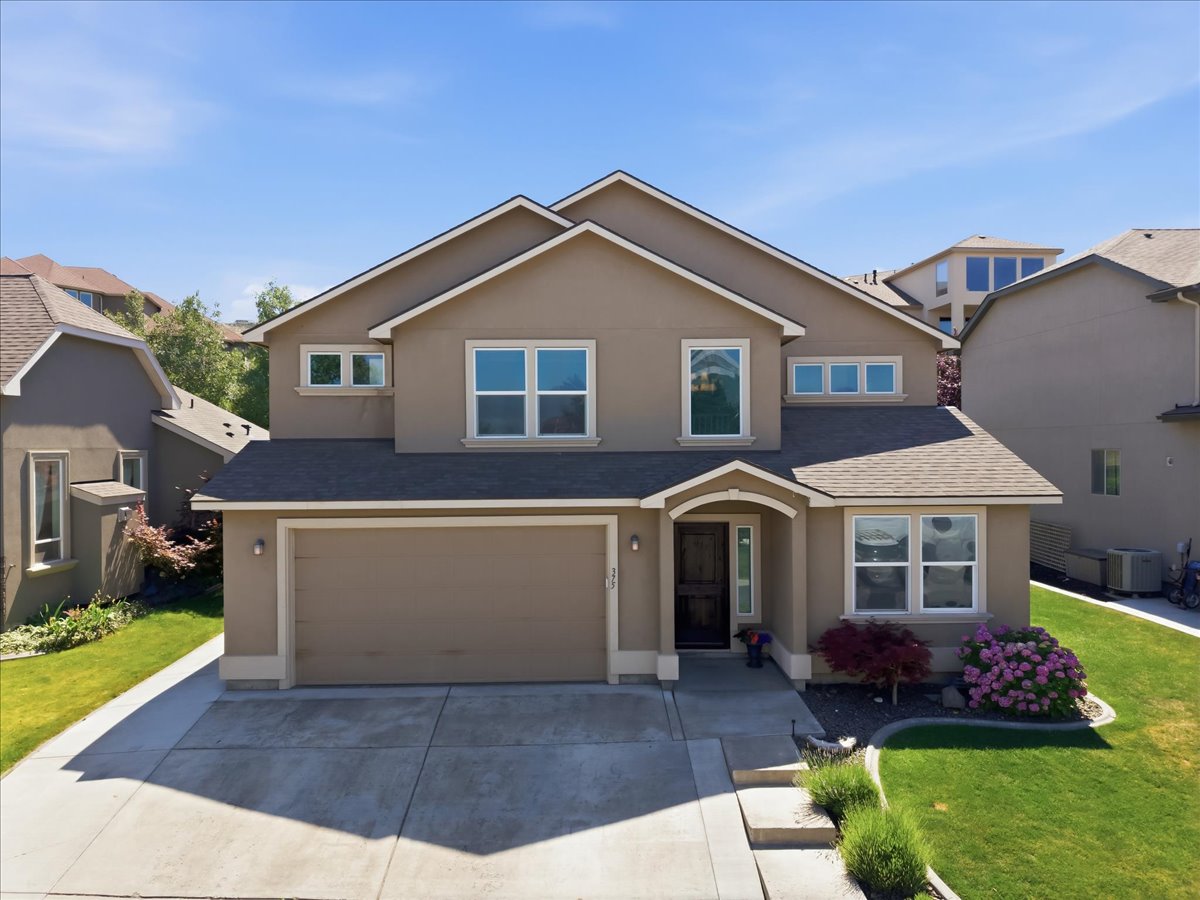
Do I Need Professional Photos to Sell My House in Tri-Cities, WA?
If you're getting ready to sell your house in Tri-Cities, WA, you may wonder whether professional real estate photography is really necessary.
Phones take incredible pictures now.
So couldn't your agent just take a few good photos, upload them with the listing, put a sign in the yard, hold an open house, and call it good?
My response is usually:
Good enough for who?
Because when I'm marketing a seller's home, the entire strategy is in service to one goal:
Get buyers to love the property enough to write an offer.
Professional photography is 100% part of my listing process.
For me, it's non-negotiable.
Not because every house needs to look like it belongs in a magazine. Not because fancy pictures magically sell houses.
It's because buyers are making decisions about your home online before many of them ever walk through the front door.
I'm Kim Feliciano, a Tri-Cities, WA REALTOR®, helping buyers and sellers in Richland, Kennewick, Pasco, West Richland, and Benton City.
I'm also a Certified Digital Marketing Specialist, and digital marketing is my world.
I've sold real estate in two Greater Seattle-area markets as well as here locally in the Tri-Cities. I've watched the way buyers search for homes change with technology, and I believe our marketing needs to change with them.
Putting a sign in the yard isn't a marketing plan.
Your Buyer's First Showing May Happen on Their Phone
Think about how you shop for almost anything today.
You look online.
Real estate is no different.
A buyer may be sitting on their couch in Richland looking at homes in Kennewick.
They may be relocating to the Tri-Cities and searching from Seattle, Portland, California, or somewhere across the country.
They haven't driven past your yard sign.
They haven't attended your open house.
They haven't stepped inside your home.
They're looking at a screen.
And they're deciding:
Do I want to know more about this house?
That's why I consider your online presentation part of the showing experience.
The Numbers Tell Us Where Buyers Are Looking
According to the National Association of REALTORS®' 2025 Home Buyers and Sellers Generational Trends report, 51% of buyers found the home they ultimately purchased on the internet.
Only 4% found the home they ultimately purchased through a yard sign or open house sign.
That doesn't mean nobody should ever hold an open house.
In fact, the same NAR research found that buyers still used open houses as one of several information sources during their home search.
But there's a big difference between saying:
"Open houses can be useful."
and:
"Putting up a sign and holding an open house is a complete marketing strategy."
It's not enough for me.
The way people find and evaluate homes has changed.
Our marketing has to reflect that.
Are Phone Photos Good Enough to Sell a House?
Good enough for who?
That's really my question.
Maybe they're good enough for you.
Maybe they're good enough for an agent trying to get a listing online quickly.
But that's not the standard I'm trying to meet.
I'm thinking about the buyer.
When your home appears next to other listings online, what does the buyer see?
Does your home catch their attention?
Do the photos make sense?
Do they help the buyer understand the space?
Does the home look properly prepared?
Do the images make them curious enough to keep scrolling?
And eventually:
Do they want to schedule a showing?
That's the person we're marketing to.
Professional Photography Is Part of My Listing Service Every Time
For my listings, professional photography isn't something I save for expensive homes.
It's not:
"We'll do professional photos if the house is nice enough."
Every seller deserves professional presentation.
A $300,000 home deserves to be properly marketed.
So does a $500,000 home.
So does a $900,000 home.
We're asking a buyer to make a major financial decision.
Why would I intentionally start that conversation with mediocre marketing?
Professional photography is part of my process 100% of the time.
Professional Photos Are Only One Part of Digital Marketing
This is where my approach goes beyond simply hiring a photographer.
Depending on the property and the marketing strategy, I may also use:
Video marketing
Drone photography
Drone video footage
Estimated property boundary outlines
3D tours
2D floor plans
Room and property measurements
Not every marketing tool is necessary for every single house.
The property matters.
The buyer we're trying to reach matters.
The story we're trying to tell matters.
But I want the tools available.
Because my job isn't simply to get your house into the MLS.
My job is to market it.
There's a Difference Between Listing a Home and Marketing a Home
Almost any licensed real estate agent can put a listing into the MLS.
That's the mechanical part.
Photos.
Description.
Price.
Property details.
Submit.
Live.
But then what?
That's the question I think sellers should ask when interviewing an agent.
What happens after my listing goes live?
How are buyers going to see it?
How are you going to present it?
What are you doing with video?
What does the property look like on a phone?
How are you using social media?
What happens when the listing isn't getting the response we expected?
What data are you watching?
What are you prepared to change?
Those questions matter to me because marketing isn't one event.
It's an ongoing process.
Technology Changed. Real Estate Marketing Should Have Changed Too.
Real estate has a lot of traditional tactics.
Put a sign in the yard.
Print a flyer.
Hold an open house.
Wait for buyers.
Those tools can still have a place.
But the world changed.
Buyers changed.
Technology changed.
How people consume information changed.
How people search changed.
How people compare homes changed.
How quickly they make decisions about what deserves another click changed.
That's why I think it's important to hire an agent who doesn't simply understand that technology changed.
They need to know how to implement that change into the marketing of your home.
Those are two very different skills.
Understanding Digital Marketing Isn't the Same as Posting on Social Media
This distinction matters.
Digital marketing isn't:
"I put your listing on Facebook."
Posting is an activity.
Marketing requires a strategy.
Who are we trying to reach?
What are we showing them?
What's the goal of the content?
What does the photography communicate?
What information does the buyer need?
How are we creating enough interest to move someone from looking online to taking action?
That action might be watching the full property video.
It might be clicking through a 3D tour.
It might be studying the floor plan.
It might be sending the listing to their spouse.
It might be contacting their agent.
Ultimately, I want them scheduling the showing.
Then I want the house itself to support what the marketing promised.
Photography and Staging Work Together
This is where professional photography connects directly with how I prepare a home for sale.
I recently wrote about why I use staging as a positioning tool.
I call staging my "look over here" tactic.
Photography takes that idea online.
If we've intentionally prepared a living room to draw attention to the space, the photographer needs to capture it properly.
If the view is important, we need to show it.
If the kitchen is one of the strongest features of the house, our visual marketing should reflect that.
If we've selectively staged a vacant home so buyers can understand scale and function, the photography needs to carry that experience onto the screen.
We're not making individual marketing decisions in isolation.
We're building the presentation of the property.
A Vacant Home Can Benefit Even More From Strong Visual Marketing
Vacant homes create a unique challenge.
There's nothing else to look at.
Without furniture, buyers may struggle with scale.
They may spend more time studying small condition items because there's nothing visually competing for their attention.
That's why I may recommend selectively staging important areas.
Then professional photography helps translate that work online.
Instead of a buyer scrolling through photo after photo of empty rooms, we're helping them understand:
This is the living room.
Here's how furniture fits.
Here's how the dining area relates to the kitchen.
Here's the scale of the primary bedroom.
The marketing starts helping the buyer understand how the house lives.
Floor Plans Help Answer a Different Question
Photos show buyers what the house looks like.
A floor plan helps them understand how it fits together.
Those aren't the same thing.
Maybe a buyer wants to know whether the primary bedroom is separated from the other bedrooms.
Maybe they're trying to understand where the office is in relation to the living room.
Maybe they're wondering whether their furniture will fit.
Maybe the photos make the house interesting, but they still can't quite understand the layout.
A 2D floor plan and measurements can help fill that information gap.
That's why I like giving buyers multiple ways to understand a property.
3D Tours Let Buyers Explore Differently
A 3D tour serves another purpose.
Instead of me deciding which photo the buyer sees next, the buyer gets more control over how they explore the home.
They can move through rooms.
Look around.
Go back.
Study a space again.
For someone relocating to the Tri-Cities, that can be especially useful because they may not be able to casually drive over and see the property.
Does a 3D tour replace an in-person showing?
No.
That's not the goal.
It gives buyers another way to engage with the property before deciding what to do next.
Drone Photography Can Give Buyers Context
Some properties benefit from seeing more than what's visible at eye level.
That's where drone photography and video can be useful.
Maybe the lot itself is important.
Maybe there's space around the house that traditional photography doesn't communicate well.
Maybe we want to show how the property sits in relation to surrounding features.
For some properties, I may use estimated boundary outlines with aerial imagery to help buyers better visualize the parcel.
Notice I said estimated.
A marketing graphic isn't a survey, and I'm not presenting an estimated outline as a legally established property boundary.
It's a visual tool to help buyers understand the property.
Video Marketing Isn't Just a Slideshow of Listing Photos
Video gives us another opportunity to capture attention.
And I don't mean taking the professional photos, adding music, and calling that a complete video strategy.
Video can help buyers experience movement through the home.
It can highlight features differently.
It can be used in social media.
It can introduce the property to people who may not have been actively scrolling through listings at that exact moment.
Again, the goal isn't to use technology just so I can tell a seller:
"Look at all the things I do."
The goal is to use the right tools in service of getting buyers interested in the property.
More Marketing Doesn't Mean Random Marketing
This is important.
I don't believe throwing every possible marketing tactic at a house automatically creates a good strategy.
More isn't always better.
Intentional is better.
A particular property may benefit significantly from drone footage.
Another may not.
A floor plan may be incredibly helpful for a home with a layout that's difficult to understand from photos.
A 3D tour may provide significant value for buyers evaluating the home remotely.
The question is always:
What does this particular property need?
That's the same philosophy I use with staging.
We don't do things simply because they're on a checklist.
We do them because there's a reason.
The Goal Is Not Views
This is another digital marketing distinction I think sellers should understand.
A listing getting a lot of views online can feel exciting.
But views aren't the ultimate goal.
Neither are likes.
Neither are social media impressions.
Neither are people telling us:
"Beautiful house!"
The goal is buyer action.
Did people schedule showings?
Did buyers return for another look?
Did their agents ask questions?
Did somebody write an offer?
The entire strategy is in service to getting buyers to love the property and write an offer.
That's the result I'm working toward.
What Happens If the Marketing Isn't Creating Buyer Action?
Then I want to know.
I don't put a listing online and disappear for 30 days.
I evaluate my listings weekly.
I'm looking at things like online views, shares, impressions, advertising analytics, online leads, buyer-agent showings, feedback, and what's happening with the competing homes around us.
Because marketing gives us information too.
If buyers are seeing the property but not scheduling showings, that's information.
If they're showing but not writing offers, that's information.
If competing homes are going pending and ours isn't, that's information.
I want to understand the pattern.
Then we decide whether we need to pivot.
Professional Photography Can't Fix the Wrong Price
This is where I don't want sellers getting the wrong idea.
Amazing marketing doesn't make price irrelevant.
I can professionally photograph a home.
Create video.
Use drone footage.
Build a 3D tour.
Provide a floor plan.
Market it digitally.
And still have a problem if buyers don't see enough value at the asking price.
That's why my seller strategy isn't:
Marketing OR pricing.
It's pricing and positioning and presentation and marketing.
They work together.
Professional Photography Can't Fix Condition Either
The same applies to condition.
Professional photography should present the property well.
It shouldn't be used to intentionally misrepresent what the buyer is going to see when they arrive.
If the online presentation makes a buyer expect one thing and the physical property delivers something completely different, we've created a problem.
I want the marketing to create excitement.
Then I want the house to support that excitement when the buyer walks through the door.
That's why preparation happens before photography.
Scenario: Two Similar Tri-Cities Homes Hit the Market
Imagine two similar homes come onto the market.
They're in a similar price range.
Similar size.
Similar overall condition.
One listing has dark phone photos.
The rooms aren't prepared.
There's no floor plan.
No video.
The buyer has to work to understand the property.
The other home has been intentionally prepared and professionally photographed.
The images are clear.
The rooms make sense.
The buyer can review a floor plan.
Maybe there's a 3D tour.
Maybe the property benefits from drone footage.
Which listing makes it easier for the buyer to become interested?
That's what we're competing for.
Attention.
Then we're trying to turn that attention into action.
What About Open Houses?
I don't think we need to make this an either-or argument.
Open houses can still be useful.
Buyers still use them as a source of information.
What I don't believe is that putting a sign in the yard and holding an open house should be mistaken for a complete modern marketing plan.
The NAR data is a good reminder of why.
In its 2025 generational research, the internet was where 51% of buyers found the home they ultimately purchased, compared with 4% through an open house or yard sign.
That's a massive difference.
So yes, we can use traditional tactics where they make sense.
But I'm going to put serious attention into where buyers are actually spending their time.
What Should Sellers Ask an Agent About Marketing?
Don't ask only:
"Do you use professional photography?"
I think that's a very low bar today.
Ask:
What is your actual marketing strategy after my house is listed?
What visual marketing do you use?
How do you decide whether a property needs drone photography or video?
Do you provide floor plans?
Do you use 3D tours?
How do you market online?
What data do you monitor after the listing launches?
How often do you evaluate whether the strategy is working?
What happens if buyers aren't responding?
You aren't simply hiring someone to put your property into a database.
You're hiring someone to help position and market one of your largest assets.
Ask what they're actually going to do.
Why My Digital Marketing Background Matters to Sellers
I'm a Certified Digital Marketing Specialist.
But the certification itself isn't the point.
Implementation is the point.
Understanding that marketing has changed isn't enough.
An agent has to know what to do with that information.
Technology is going to continue changing.
The platforms buyers use will continue changing.
The way people consume content will continue changing.
The tools available to market homes will continue changing.
I don't want my sellers relying entirely on a marketing strategy built for the way people searched for homes years ago.
I want to meet buyers where they are now.
Common Photography and Marketing Mistakes Sellers Should Watch For
One mistake is thinking phone photos are fine because the phone has a great camera.
The camera is only part of professional real estate photography.
Another is photographing the house before it's properly prepared.
Another is assuming the MLS itself is the entire marketing strategy.
Another is using technology without having a reason for it.
A drone doesn't make an agent a digital marketer.
A social media post doesn't create a strategy.
And probably the biggest mistake is forgetting who all of this is for.
The buyer.
Good enough for who?
That's the question.
FAQ: Professional Real Estate Photography in Tri-Cities, WA
Do I need professional photos to sell my house in Tri-Cities, WA?
Professional photography is part of my listing service 100% of the time.
I consider it a fundamental part of presenting a home to today's buyers because so much of their initial search and evaluation happens online.
Can't my REALTOR® just take photos with a phone?
A modern phone can take impressive pictures.
But my standard isn't whether we can technically produce an acceptable image.
My question is whether we're presenting your property as effectively as we can to the buyers we're trying to attract.
For my listings, I use professional photography.
Does every Tri-Cities listing need drone photography?
Not necessarily.
I use marketing tools based on the property and strategy.
Drone photography and video can be particularly useful when the property, lot, setting, or surrounding context benefits from an aerial perspective.
Do you use 3D tours for listings?
3D tours are one of the tools available in my marketing approach. They can give buyers another way to explore a property remotely and better understand the home before or after an in-person showing.
Why are floor plans useful when there are already photos?
Photos and floor plans answer different questions.
Photos help buyers see the rooms.
A floor plan helps buyers understand how those rooms connect and how the home is laid out.
Measurements can provide additional context as buyers evaluate whether the property works for them.
Are open houses still worth doing?
Open houses can still be useful, and NAR research shows buyers continue to use them as an information source.
I simply don't treat an open house and a yard sign as a complete marketing strategy.
Buyers are heavily using the internet during their home search, so the digital presentation of the property matters enormously.
Will professional photography make my house sell?
Professional photography doesn't guarantee that your home will sell.
Neither does video, drone footage, a 3D tour, or any other individual marketing tactic.
Price, condition, presentation, location, competition, and current market conditions all play a role.
My goal is to put those pieces together into a strategy.
So, Do You Need Professional Photos to Sell Your Tri-Cities Home?
If I'm the one listing it?
Yes.
Professional photography is 100% part of my listing process.
Because I'm not asking:
"Can we get some pictures that are good enough to put online?"
I'm asking:
Good enough for who?
The buyer sitting on their couch comparing your Richland home against five others.
The family relocating to Pasco who can't easily tour every house in person.
The buyer scrolling through Kennewick listings on their phone.
The person looking at your Benton City property and trying to understand the land.
The buyer deciding whether your West Richland home deserves another click.
That's who I'm thinking about.
Professional photography is the foundation, and depending on the property, we can build from there with video marketing, drone photography and footage, estimated boundary outlines, 3D tours, 2D floor plans, measurements, and other digital marketing.
But technology by itself isn't the strategy.
Knowing how and why to use it is.
The entire strategy is in service to one goal:
Get buyers to love your property enough to write an offer.
That's what we're working toward.
If you're preparing to sell in Richland, Kennewick, Pasco, West Richland, Benton City, or elsewhere in the Tri-Cities, let's talk about how your home should actually be positioned and marketed before it goes live.
Kim Feliciano
Tri-Cities, WA REALTOR®
Helping buyers and sellers navigate the housing market in:
Richland
Kennewick
Pasco
West Richland
Benton City
Website: www.heykimfeliciano.com
Say hello on socials: Instagram | Facebook | TikTok
Monthly market updates: YouTube