
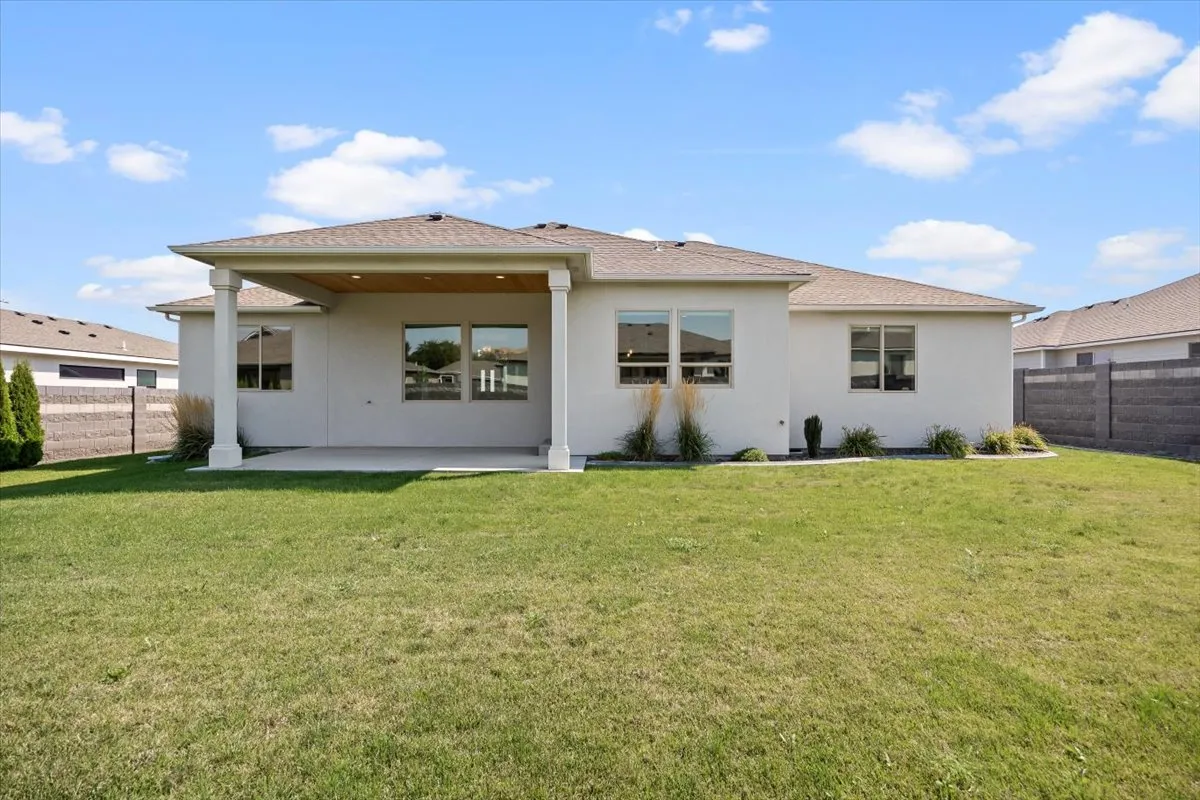
Can I Sell My Tri-Cities Home If I Bought It Recently?
If you bought a home in the Tri-Cities recently and already need to sell it, you may be asking a pretty uncomfortable question:
Did I buy this house too recently to sell without losing money?
Maybe.
But that's not actually the first question I want to answer.
I want to know why you need to sell, what the house could realistically sell for today, what you still owe, and what your alternatives would cost you.
Because sometimes selling at a loss is the wrong decision.
Sometimes keeping the house is the wrong decision.
And sometimes homeowners become so determined not to “lose money” on the sale that they spend even more money trying to avoid the loss.
I'm Kim Feliciano, a REALTOR® in the Tri-Cities helping buyers and sellers in Richland, Kennewick, Pasco, West Richland and Benton City.
If you bought recently and your situation changed, my job isn't to immediately put a sign in your yard.
First, I want to understand the entire situation.
Yes, You Can Sell a Home You Bought Recently
There's no general rule that says you have to own a home for five years before you're allowed to sell it.
The bigger issue is financial.
When you sell, the sale proceeds generally have to account for your remaining mortgage payoff and the expenses associated with the sale.
If you bought recently, you may not have built enough equity yet to comfortably absorb those expenses.
That's why someone can look at their estimated home value and think they're fine, only to discover that the actual net is very different.
If you bought for $450,000 and believe the house is still worth $450,000, that doesn't automatically mean you can sell it and walk away even.
We need to run the numbers.
Start With the Seller Net, Not What You Paid
One of the first things I do with sellers is prepare an estimated net sheet.
For someone who bought recently, this becomes especially important.
I want to know things like:
What did you pay?
What's the current mortgage balance?
What's your interest rate?
What could the house realistically sell for today?
What selling expenses should we estimate?
Are there potential buyer concessions we need to consider?
Are there repairs or preparation costs?
Do you have another lien against the property?
Once we have those numbers, we can estimate what selling may actually look like.
Then we have something useful to discuss.
Your Purchase Price Doesn't Determine Today's Sale Price
This can be a difficult part of the conversation.
Maybe you bought the house for $500,000 last year.
That doesn't mean the next buyer automatically pays you $500,000 plus your selling expenses.
The market doesn't know what you need to net.
The market also doesn't know how much you spent moving, how much cash you put down or how much money you've put into the house.
We need to look at today's market.
What have comparable properties sold for?
What's currently competing with you?
What condition is your house in?
How is your location performing?
How much inventory does a buyer have to choose from?
That's how I start forming a realistic pricing strategy.
What If Selling Means Taking a Loss?
This is where I don't want emotion to take over the math.
Nobody likes hearing:
“You may lose money if you sell.”
I understand that.
But once we know that, I want to ask another question:
What does not selling cost you?
That's the part homeowners sometimes miss.
Keeping a house isn't free.
Compare the Loss to the Cost of Keeping the House
Let's use a hypothetical example.
These numbers are intentionally simple because I want to show you the thought process, not tell you what your particular house will cost.
Suppose after reviewing the estimated sale price, mortgage payoff and expected selling expenses, we estimate that selling today would leave you $20,000 short of where you want to be.
That's painful.
Your first reaction may be:
“Absolutely not. I'll keep it until I can get my money back.”
Okay.
Let's run that option too.
Suppose keeping the home costs you $3,000 per month between the mortgage payment, property taxes and homeowners insurance.
Maybe you're able to rent it for $2,500 per month.
At first glance, you may think you're only losing $500 a month.
But that's not necessarily the complete rental picture.
A Rental Has Expenses Beyond the Mortgage
A tenant doesn't make your ownership costs disappear.
You may need to consider:
Property management.
Maintenance.
Repairs.
Vacancy between tenants.
Landlord insurance.
HOA expenses, if applicable.
Utilities or services you remain responsible for.
Yard maintenance depending on the lease.
Unexpected major repairs.
And possibly legal, accounting or tax-related expenses associated with becoming a landlord.
So let's say our hypothetical house ends up costing you an average of $700 more per month to keep than the income it's producing.
That's $8,400 per year.
Two years would be $16,800.
And that's before a major unexpected expense.
Now imagine the HVAC system needs a $7,000 repair or replacement during that period.
Our attempt to avoid a $20,000 loss could potentially cost more than $20,000.
That's why I don't want the conversation to stop at:
“I refuse to sell for less than I paid.”
We need to compare the alternatives.
Taking a Loss Can Still Be the Less Expensive Decision
This sounds strange until you see it on paper.
Imagine you have two choices.
Option A:
Sell now and bring $20,000 to closing.
Option B:
Keep the house for two years hoping the value increases enough to eliminate the loss.
If keeping it costs you $700 per month out of pocket, that's $16,800 over two years.
Add a $7,000 major repair and now you're at $23,800.
And we still don't know what the house will be worth two years from now.
Maybe it appreciates.
Maybe it doesn't.
Maybe rent increases.
Maybe expenses increase too.
I'm not saying you should take the $20,000 loss.
I'm saying we should compare $20,000 today with the realistic cost and risk of trying to avoid it.
Those are two different conversations.
But Renting the Home Could Also Be the Better Option
Now let's change the hypothetical.
Suppose the home's total monthly carrying costs are $2,500.
After researching realistic rent and talking with the appropriate professionals, you believe the property could rent for $2,800.
Maybe the numbers give you enough room to account for maintenance, vacancy and other expenses.
You also have adequate savings.
You're comfortable becoming a landlord.
And keeping the property fits your long-term financial plan.
That's a very different situation.
Renting might deserve serious consideration.
The point isn't that renting is good or bad.
The point is that we need the actual numbers.
Can You Turn Your Current Home Into a Rental?
Possibly.
But this is an area where I don't want to make assumptions.
Before you rent out a home that you originally purchased as your primary residence, I would want you to speak directly with your mortgage servicer or lender and verify any requirements associated with your specific loan.
Different loans can have occupancy requirements and other terms that matter.
For example, VA-backed purchase loans have occupancy requirements when the home is purchased. Conventional underwriting also distinguishes between principal residences and investment properties, and keeping a departing residence can affect qualification when you're trying to finance another home.
The important thing is not to hear somebody online say, “Just rent it out,” and assume that applies to your situation.
Verify your actual loan.
Keeping the House Could Affect Buying Your Next One
This is another important piece.
Maybe you can rent the house.
Great.
But are you also trying to buy another home?
Now your lender needs to be involved.
The existing mortgage doesn't simply disappear because a tenant is making rent payments.
How rental income is treated when qualifying for another mortgage depends on the loan program, documentation, property history and underwriting requirements.
That's why one of my questions would be:
Have you talked with your lender about what happens if you keep this house?
You may discover keeping it works perfectly.
You may discover it changes what you qualify for on the next purchase.
I want to know that before you commit to becoming a landlord.
Your Current Interest Rate Matters Too
Suppose you bought when rates were lower than what's available when you're considering your next move.
That existing financing may be part of the decision.
It doesn't automatically mean you should keep the house.
But I want it on the table.
What's the mortgage balance?
What's the payment?
What's the rate?
What's realistic rent?
What's the expected monthly difference?
What reserves do you have?
What does keeping this mortgage do to your ability to buy another property?
We're looking at the whole financial picture.
Becoming a Landlord Is Not the Same as Keeping an Investment Account
This is something I want homeowners to think about seriously.
A rental property isn't passive simply because somebody else lives there.
Things break.
Tenants move.
Properties need maintenance.
There are legal responsibilities.
There are insurance considerations.
There are tax considerations.
There may be property management decisions.
And Washington has specific landlord-tenant laws that apply to residential rentals.
If you're thinking about becoming a landlord because you genuinely want to own a rental property, that's one conversation.
If you're becoming a landlord solely because you can't emotionally accept selling the house for less than you paid, I want us to slow down and look at the numbers.
Those are very different motivations.
Washington Landlord Laws Matter
If you rent your Tri-Cities home, you're not simply a homeowner collecting a check.
You're becoming a landlord.
Washington residential rentals are generally governed by the state's Residential Landlord-Tenant Act, and there are rules involving things like notices, deposits, rent increases, property condition and the landlord-tenant relationship.
Those laws can change.
That's why I'm not going to give you legal advice about how to structure your lease or manage a tenant.
If renting becomes a serious option, talk with a qualified Washington landlord-tenant attorney or experienced property manager about your responsibilities.
Insurance May Need to Change
Don't assume the homeowners insurance policy you had while living in the property is automatically appropriate once a tenant moves in.
Call your insurance professional.
Tell them exactly what you're considering.
Ask what coverage you'll need if the property becomes a rental.
Then include that cost in our comparison.
Again, we're trying to find the real carrying cost, not the number that makes the rental option look best.
What About Taxes?
This is another place where I want a qualified professional involved.
Turning a primary residence into a rental can affect the tax picture.
Rental income and expenses have tax implications.
Depreciation can matter.
And converting a home to rental use can affect how a future sale is treated.
The IRS also generally says a loss on the sale of a personal residence isn't deductible.
But once a property has been converted to rental use, the tax rules become more complicated.
That's CPA territory.
I can help you understand the real estate options.
Your tax professional should tell you how those options affect your specific tax situation.
Don't Keep the House Based on Future Appreciation Alone
Here's another trap:
“I'll just rent it for two years because the house will be worth more then.”
Maybe.
But we don't know that.
The house could appreciate.
It could stay relatively flat.
Your particular price range could behave differently from the broader market.
And even if the house does appreciate, we still need to compare that appreciation with what you spent holding the property.
Suppose your home increases $20,000 in value over two years.
Sounds great.
But what if you spent $18,000 subsidizing it and another $8,000 on repairs during that time?
The headline appreciation number doesn't tell the entire story.
Don't Forget Vacancy
This is another number that's easy to ignore.
Suppose your tenant moves out.
How long will it take to get the home ready again?
Will you need paint?
Carpet cleaning?
Repairs?
Landscaping?
Professional cleaning?
How quickly can another qualified tenant move in?
If the house sits vacant for one month, you still have a mortgage payment.
Two months?
Same thing.
I don't want to assume 12 perfect rent checks every year when we're deciding whether keeping the property is financially sustainable.
Maintenance Reserves Matter
Homeowners already know that houses need maintenance.
As a landlord, you don't get to postpone everything simply because you're not the one living there.
Water heaters fail.
HVAC systems age.
Appliances break.
Irrigation systems need attention.
Roofs don't care whether the property is owner-occupied or rented.
If keeping the house only works financially when absolutely nothing goes wrong, that's important information.
What If You Can't Afford the Loss at Closing?
Now we have another problem to solve.
Maybe selling appears to be the better long-term decision, but you don't have the cash necessary to complete the sale under the numbers we're estimating.
Don't ignore that.
We need to understand the mortgage payoff, estimated proceeds and potential shortfall.
Depending on the circumstances, you may need conversations with your mortgage servicer, lender, attorney or other appropriate professional about what options actually exist.
I would not promise that a lender will accept less than what's owed or that a particular loss-mitigation option is available.
Those are lender-specific and situation-specific decisions.
The earlier we understand the problem, the more time you have to explore legitimate options.
Scenario: The Homeowner Who Needs to Relocate
Let's say you bought a Tri-Cities home 18 months ago.
Now you've received a job opportunity somewhere else.
You need to move.
We estimate that selling now could mean bringing $15,000 to closing.
Your immediate reaction is to rent the house.
That's reasonable to explore.
So we start gathering information.
What's the mortgage payment?
What's realistic market rent?
What will landlord insurance cost?
Will you hire a property manager?
How much should you reserve for maintenance and vacancy?
Does your mortgage have requirements we need you to verify?
Will keeping the property affect financing your next home?
Now you can compare the options.
Maybe renting works beautifully.
Maybe it doesn't.
But we're no longer making the decision because selling at a loss feels bad.
We're making it with information.
Scenario: Keeping the House Starts Draining Your Savings
Let's use another hypothetical.
You decide not to sell because you'd lose $25,000.
Instead, you keep the house.
Between the mortgage and other ownership expenses, you're covering an $800 monthly shortfall after rent.
That's $9,600 per year.
Then the water heater goes.
Then the tenant moves out and the property sits vacant.
Then you need repairs before the next tenant moves in.
Meanwhile, you're also paying for your own housing somewhere else.
After two years, your savings account is dramatically smaller.
Even if the home eventually sells for more, we still need to subtract what keeping it cost you.
Avoiding a loss on paper doesn't help if the carrying costs drain you financially.
Scenario: Keeping the House Actually Works
Now let's look at the opposite.
Your mortgage payment is manageable.
Market rent comfortably covers the expected expenses.
You have cash reserves.
You don't need the equity for your next move.
You've verified the mortgage situation.
You've talked with your insurance professional.
You've talked with your CPA.
You understand Washington landlord responsibilities.
And you actually want to own a rental property.
In that situation, keeping the home may be a completely reasonable option to explore.
That's why I don't believe in giving every homeowner the same answer.
Sometimes the Question Isn't “Will I Lose Money?”
It may be:
Which choice costs me less?
Or:
Which choice gives me the strongest financial position two years from now?
Or:
Which option lets me move forward without draining my emergency savings?
Or:
Do I actually want to be a landlord?
Or:
Can I qualify for my next home if I keep this one?
Those are better questions.
Common Mistakes When Selling a Recently Purchased Home
One mistake is assuming you have to keep the house until you can sell it for more than you paid.
Another is looking only at the mortgage payment when estimating rental profitability.
Another is assuming rent will arrive every month without vacancy, repairs or maintenance.
Another is assuming you can turn the house into a rental without verifying your mortgage, insurance and legal responsibilities.
Another is assuming future appreciation will solve the problem.
Another is ignoring how the existing mortgage could affect your next purchase.
And a big one is comparing the pain of an immediate loss with zero cost for keeping the property.
Keeping it has a cost too.
Put both numbers on paper.
What Numbers Should You Gather Before Deciding?
If you're in this situation, I would start with:
Your approximate current mortgage balance.
Your mortgage payment.
Your interest rate.
Your estimated current home value.
A realistic expected sale price.
Estimated selling expenses.
Realistic market rent.
Expected property management costs, if applicable.
Insurance costs as a rental.
HOA expenses, if applicable.
Maintenance reserves.
Vacancy assumptions.
Cash reserves.
And what you plan to do for housing after you move.
Then we can start comparing paths.
FAQ: Selling a Tri-Cities Home You Bought Recently
Can I sell my house one year after buying it?
Generally, you can sell a home even if you bought it recently. The bigger question is whether the estimated sale proceeds will cover your mortgage payoff and selling expenses, and whether there are tax or financial consequences specific to your situation.
What if my house is worth less than I paid?
Start by estimating the actual seller net. Then compare the potential loss from selling with the realistic cost of keeping the property. Don't assume keeping it is automatically cheaper.
Should I rent my house instead of selling it at a loss?
Possibly. Look at realistic rent, mortgage and ownership costs, vacancy, maintenance, management, insurance, your cash reserves and whether you actually want to become a landlord. Verify your loan requirements and talk with the appropriate legal and tax professionals.
Can I rent out a house with a VA, FHA or conventional mortgage?
Don't rely on a blanket answer online. These loan programs have different occupancy and underwriting rules, and your particular circumstances matter. Contact your mortgage servicer or lender and verify the requirements associated with your actual loan before converting the home to a rental.
Can rental income help me qualify to buy another house?
Potentially, but lenders have specific rules for documenting and calculating rental income, especially when a current residence is being converted into a rental. Talk with your lender before assuming the full rent amount will offset your existing mortgage.
Is losing money on the sale of my primary home tax deductible?
The IRS generally says a loss on the sale of a home used as your personal residence isn't deductible. Rental conversion can complicate the tax treatment, so talk with a qualified tax professional about your particular situation.
How long should I keep my home before selling?
There isn't one magic number that works for everyone. I would look at your estimated seller net, carrying costs, future housing plans, current market conditions and alternatives rather than choosing an arbitrary number of years.
Sometimes Selling at a Loss Is Still Moving Forward
I know how emotionally difficult this conversation can be.
You bought a house expecting one thing.
Then life changed.
Maybe you're relocating.
Maybe your family changed.
Maybe your finances changed.
Maybe the house simply no longer fits your life.
Selling for less than you hoped doesn't automatically mean buying the home was a mistake.
And keeping the property doesn't automatically mean you're protecting your investment.
We need to know what each choice actually costs you.
If selling today means taking a $20,000 loss, let's put that number on paper.
Then let's put the cost of keeping the house on paper too.
Let's explore whether renting is realistic.
Let's verify your mortgage situation.
Let's consider your next housing move.
Let's account for vacancy, maintenance, insurance and reserves.
Let's bring in your lender, CPA, attorney, insurance professional or property manager when their expertise is needed.
Then you decide.
I'm Kim Feliciano, a REALTOR® in the Tri-Cities helping buyers and sellers in Richland, Kennewick, Pasco, West Richland and Benton City.
My job isn't to push you toward selling simply because I'm a real estate agent.
It's to help you understand the real estate side of your options so you can make a decision that works for your actual life.
Because sometimes taking a loss hurts.
But sometimes spending even more money trying to avoid that loss hurts a whole lot more.
If you need help weighing your options, Book a time with me here.
Kim Feliciano
Tri-Cities, WA REALTOR®
Helping buyers and sellers navigate the housing market in:
Richland
Kennewick
Pasco
West Richland
Benton City
Website: www.heykimfeliciano.com
Say hello on socials: Instagram | Facebook | TikTok
Monthly market updates: YouTube