
Should I Sell My Tri-Cities Home Vacant or Leave It Furnished?
If you're moving out of your Tri-Cities home before it sells, there's a question that usually comes next:
Should I leave some furniture behind, or should I sell the house completely empty?
My answer depends on the house and the furniture.
Vacant isn't automatically better.
Furnished isn't automatically better either.
And leaving a sofa, a random bed and an old dining table behind doesn't necessarily make a house “staged.”
I'm Kim Feliciano, a REALTOR® in the Tri-Cities helping buyers and sellers in Richland, Kennewick, Pasco, West Richland and Benton City.
When we're preparing your home for sale, I want everything inside the property to have a purpose.
If you're already moving out, I don't want you leaving random furniture behind just so the house isn't empty. Everything we leave in that house should help the buyer understand the space, not make it look like you forgot to finish moving.
Is It Harder to Sell a Vacant House?
Not necessarily.
I've sold vacant homes.
I've sold occupied homes.
I've sold homes that were staged.
I've sold homes that weren't.
The question isn't whether buyers will purchase a vacant house.
They absolutely can.
The question is how your particular home presents when it's empty.
Some homes look fantastic vacant.
They're bright.
The rooms are easy to understand.
The condition is good.
The floor plan makes sense immediately.
Other homes benefit from furniture because it helps buyers understand scale and how certain spaces could function.
That's why I don't use one rule for every listing.
What Happens When Buyers Walk Into an Empty House?
When a house is empty, there's nowhere for the eye to hide.
Buyers may notice:
Flooring.
Walls.
Baseboards.
Scuffs.
Small repairs.
Window coverings.
Room dimensions.
Lighting.
Ceilings.
Outlets.
Deferred maintenance.
That's not necessarily bad.
But it does mean the condition of the property can become more noticeable.
A beautiful empty house can feel clean and spacious.
A house with deferred maintenance can feel even more unfinished once everything is removed.
Furniture Can Help Buyers Understand Scale
One of the most useful things furniture can do is answer:
“Will my stuff fit in here?”
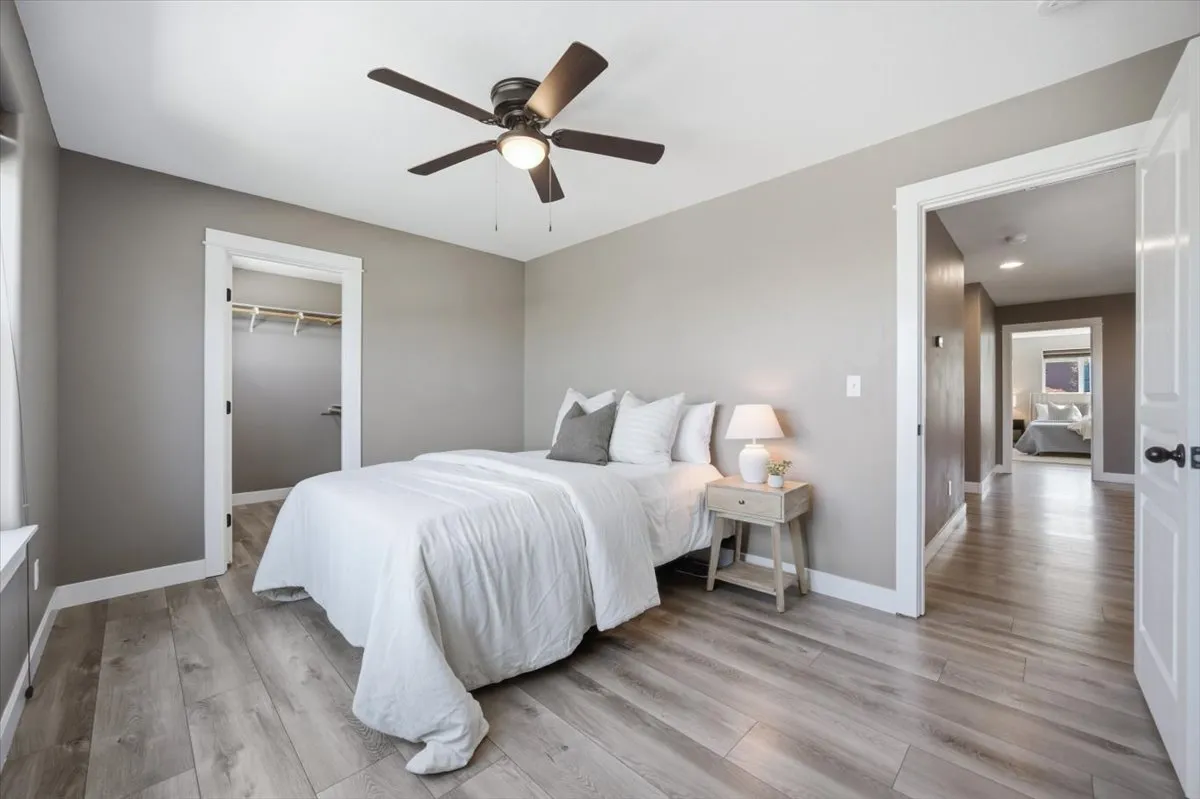
An empty bedroom may look surprisingly small in photographs.
Put a properly sized bed and nightstands in the room and suddenly a buyer understands the scale.
The same thing can happen in a living room.
An empty space might leave buyers wondering where a sofa would go.
Furniture can demonstrate a natural layout.
That's especially useful when a room has an unusual shape or more than one possible function.
But Too Much Furniture Can Make a Room Feel Smaller
Furniture only helps when it's helping.
A huge sectional in a modest living room can make the space feel cramped.
An oversized dining table can make buyers think the dining area is smaller than it actually is.
Too many dressers can overwhelm a bedroom.
Extra chairs, cabinets, desks and shelves can create visual clutter.
That's why I don't automatically tell a seller:
“Leave all your furniture.”
Sometimes removing furniture is exactly what makes the house show better.
Furnished Is Not the Same as Staged
This distinction matters.
A furnished home has furniture in it.
A staged home is intentionally presented to help buyers understand and emotionally connect with the space.
Those aren't always the same thing.
You can have a beautifully furnished house that isn't particularly effective for selling.
You can also have a fairly simple setup that photographs and shows extremely well.
Staging is about positioning.
Not simply filling rooms.
Do I Need to Professionally Stage My Vacant House?
Not automatically.
Staging can be a useful tool.
I've personally had success with staged listings, and in my experience staging can help with presentation.
But I would never promise that staging guarantees a faster sale or a higher price.
Before recommending that you spend money on staging, I want to look at the actual property.
What's the price point?
What's the floor plan?
What's the condition?
How does it photograph empty?
Are there spaces buyers may struggle to understand?
What's the competition doing?
How much will staging cost?
What are we trying to accomplish?
The staging should have a job.
Selective Staging Can Be an Option
Sometimes we don't need to furnish an entire vacant house.
Maybe the rooms that matter most are:
The living room.
Dining area.
Primary bedroom.
An unusual bonus space.
An office.
That may be enough to help buyers understand the home.
I'm much more interested in intentional presentation than putting furniture in every room simply because the house is empty.
Should I Leave My Own Furniture Behind?
Possibly.
But let's look at it before the movers leave.
If your furniture is appropriately sized, in good condition and helps define the rooms, keeping certain pieces temporarily could make sense.
If you're leaving behind the pieces you don't want because they're too difficult to move, that's a different story.
Buyers can usually tell.
I don't want the house to look abandoned.
I want it to look intentional.
Don't Leave Behind the “Moving Leftovers”
This is one of my least favorite looks in a vacant listing.
Everything has been moved out except:
One old chair.
A mattress.
A folding table.
A broken bookshelf.
A television stand nobody wanted.
Random cleaning supplies.
Boxes in the garage.
Now the house isn't furnished.
It isn't vacant either.
It just looks like moving isn't finished.
If something isn't helping us present the property, let's talk about removing it.
Professional Photography Matters Even More
Whether the house is vacant or furnished, I use professional photography for my listings.
That's non-negotiable in my listing service.
Your first showing is often happening online.
A buyer may decide whether to schedule an appointment based on those photographs.
If the house is vacant, the photographer needs to communicate the size, light and layout of those empty spaces.
If it's furnished, we want the furniture supporting the photography rather than overwhelming it.
Depending on the property, I may also use video, drone photography, estimated boundary outlines, 3D tours, floor plans and other marketing tools.
The goal is to get the right buyer interested enough to come see the house.
Floor Plans Can Be Especially Helpful for Vacant Homes
This is one reason I like floor plans when they make sense for a property.
An empty room in a photograph doesn't always tell the entire story.
A floor plan can help a buyer understand:
Where the room sits.
How rooms connect.
Approximate dimensions.
Traffic flow.
How the home functions as a whole.
Instead of trying to mentally piece together 30 photographs, the buyer has another way to understand the property.
What About Virtual Staging?
Virtual staging can sometimes help buyers visualize an empty room.
But I want it used transparently.
A digitally staged image shouldn't mislead buyers about what they're purchasing.
The actual property is still vacant.
If virtual staging is used, buyers should be able to understand that the furniture is digitally added rather than included with the house.
The goal is visualization, not creating a false version of the property.
What If My Furniture Is Outdated?
Outdated furniture doesn't automatically hurt a house.
Buyers understand they're generally buying the home, not your sofa.
But presentation still matters.
If large, dark or worn furniture makes the rooms feel smaller or distracts from the property's features, removing some of it may help.
We don't need to replace your entire furniture collection.
We need to decide what should stay and what should go.
What If My House Is Already Vacant?
That's okay.
Don't panic and assume you now have to rent an entire house full of furniture.
Let's see the property first.
Maybe it shows beautifully empty.
Maybe we only need to stage a couple of spaces.
Maybe the better use of your money is somewhere else entirely.
I don't want you spending thousands because somebody told you every vacant home must be staged.
Vacant Homes Still Need to Feel Maintained
This is a big one.
Moving out doesn't mean we're done maintaining the property.
The lawn still needs attention.
Landscaping still needs water when appropriate.
Leaves still need to be handled.
Snow or ice may need attention when weather requires it.
Trash needs to be removed.
The interior still needs cleaning.
Dust happens.
Bugs happen.
Things happen even when nobody lives there.
A vacant home that looks neglected can change a buyer's impression quickly.
Keep the Utilities in the Conversation
Don't automatically shut everything off the moment you move.
Utilities may be important for:
Showings.
Heating.
Cooling.
Lighting.
Home inspections.
Appraisal access and observations.
Repair work.
Final walkthrough.
Other transaction needs.
Exactly what should remain active and for how long depends on your property and transaction.
Let's coordinate the plan instead of discovering at an inspection that something can't be operated because a utility was disconnected.
Temperature Matters Too
Tri-Cities weather can get hot in the summer and cold in the winter.
A vacant house doesn't mean we stop thinking about interior temperature.
We want the property protected.
We also want buyers to be comfortable enough to actually experience the house during a showing.
Walking into an extremely hot house in July doesn't exactly encourage someone to slow down and imagine living there.
Neither does walking into a freezing house during winter.
Who Is Checking on the House?
Once you've moved, somebody needs to know what's happening at the property.
Maybe you're still local.
Maybe you've relocated across Washington.
Maybe you're several states away.
Either way, I want a plan.
Who notices if something leaks?
Who sees that a tree branch came down?
Who notices if the irrigation has a problem?
Who knows if the heat stops working?
Who sees that a package has been sitting at the front door for a week?
Vacant doesn't mean forgotten.
Tell Your Insurance Company
This is an important practical step.
If you're moving out and the home will be vacant or unoccupied, contact your insurance professional and explain the situation.
Don't assume your existing homeowners policy treats an occupied and vacant property exactly the same way.
Ask how your coverage works while the home is listed and what, if anything, you need to change.
That's an insurance question, not something I want us guessing about.
Security Matters When a House Is Vacant
A vacant property also needs a little extra thought around security.
Make sure doors and windows lock properly.
Remove valuables.
Don't leave personal documents behind.
Don't leave prescription medications.
Don't leave firearms or other items that should be secured.
If you're using cameras or security systems, talk with me about appropriate showing considerations.
In my own practice, I don't want indoor recording creating privacy concerns during buyer showings.
The goal is to protect the property while still allowing buyers to comfortably tour it.
Don't Advertise That Nobody Is Watching the House
This should be obvious, but it's worth saying.
There's no reason to advertise publicly that:
“The seller moved three states away and nobody checks this house.”
Buyers can know the property is vacant without us broadcasting unnecessary information about your personal circumstances.
What About Mail and Packages?
Forward your mail.
Update deliveries.
Remove personal information.
Don't let newspapers, packages or overflowing mail make it obvious that nobody has been paying attention to the property.
These are small things.
They affect how cared-for the home feels.
What If I'm Moving Out Because I'm Buying Another House?
Now we need to look at the financial side too.
Are you comfortable carrying both properties if your Tri-Cities home takes longer to sell than expected?
Mortgage.
Insurance.
Utilities.
Landscaping.
HOA dues if applicable.
Maintenance.
Staging costs if we use it.
Those expenses add up.
This is another reason I don't want to spend money on staging without discussing what we're trying to accomplish.
Your net matters.
Scenario: Your Furniture Makes the House Look Great
Let's say you're moving from a Richland home.
Your furniture fits the rooms well.
The house photographs beautifully.
You're able to leave some key pieces behind for a short period without disrupting your move.
That might be useful.
Maybe we keep the living room, dining area and primary bedroom furnished.
The rest can go.
The point isn't to preserve the entire house exactly as you lived in it.
It's to preserve the pieces that help us present it.
Scenario: You're Moving Out and Taking Everything
Also fine.
Maybe you're relocating and the moving truck is taking everything at once.
I'm not going to tell you to buy furniture just so the house has something inside it.
Let's see how it photographs vacant.
Maybe it works.
Maybe selective professional staging makes sense.
Maybe virtual staging could help buyers visualize certain spaces.
We choose based on the property.
Scenario: You're Leaving Behind Furniture You Don't Want
This is where I'm probably going to ask:
Does this actually help us?
If you're leaving a worn sofa, an oversized entertainment center and two random beds because you don't want to move them, we may be creating a different problem.
Now the home can feel partially abandoned instead of intentionally presented.
If the furniture isn't helping the buyer understand the space, let's talk about removing it.
Scenario: The House Has an Unusual Room
Maybe there's a room buyers can't quite figure out.
Is it an office?
Dining room?
Bonus room?
Sitting room?
This can be a great place for strategic staging.
A few intentional pieces can show a possible use for the space.
We're not telling the buyer how they have to use it.
We're helping them visualize one option.
Scenario: The House Has Some Wear and Tear
This is where vacant rooms can sometimes work against the seller.
Once furniture and rugs disappear, you may suddenly notice:
Floor discoloration.
Wall marks.
Baseboard damage.
Carpet wear.
Picture holes.
Touch-up paint that doesn't match.
Again, that doesn't mean we remodel.
It means we walk through the property after you've moved out and see what it actually looks like empty.
Then we decide whether any small corrections are worth making.
Clean It After the Movers Leave
Please don't schedule the final listing photography five minutes after the moving truck pulls away.
Moving creates mess.
Dust.
Debris.
Marks.
Random forgotten items.
Empty closets that need cleaning.
Garage debris.
Let's get the house cleaned and reset before we're asking buyers to evaluate it.
A vacant home can feel fresh and ready.
That's what we want.
Common Mistakes When Selling a Vacant Home
One mistake is assuming vacant automatically means the house will look bigger.
Another is assuming furniture automatically makes it look better.
Another is leaving random unwanted furniture behind and calling it staging.
Another is paying to stage every room without deciding whether it's necessary.
Another is shutting off utilities too early.
Another is forgetting about landscaping after moving.
Another is failing to check with the insurance company about vacancy.
Another is leaving mail, packages or personal information behind.
Another is failing to have somebody monitor the property.
Another is letting the house get dusty or neglected because nobody lives there.
And one of the biggest mistakes is treating the house like you're finished with it because you've already moved.
You may be done living there.
We're not done selling it.
FAQ: Selling a Vacant or Furnished Home in Tri-Cities, WA
Is it better to sell my Tri-Cities home vacant or furnished?
It depends on the property. Some homes show beautifully vacant, while others benefit from furniture that helps buyers understand room scale and function.
Does an empty house look bigger?
Sometimes, but not always. Without furniture, buyers may have difficulty judging room dimensions. Furniture that's appropriately sized can actually help communicate scale.
Should I leave my furniture when I move out?
Only if it helps present the home and works with your moving plans. Don't leave unwanted furniture behind simply because you think any furniture is better than an empty room.
Do I need to professionally stage a vacant house?
Not necessarily. The decision should depend on the home's layout, condition, price point, competition and what we're trying to accomplish.
Can I stage only part of the house?
Yes. Selective staging of important or difficult-to-understand spaces can sometimes make more sense than furnishing the entire property.
Should I leave the utilities on after moving out?
Don't automatically disconnect them. Utilities may be needed for showings, temperature control, inspections, appraisal-related access, repairs and final walkthrough. Coordinate the timing based on your transaction.
Do I need to tell my insurance company the house is vacant?
Contact your insurance professional and explain that you're moving out while the home is listed. Ask how vacancy or unoccupancy affects your particular coverage.
Who takes care of my house after I move?
Have a plan for ongoing monitoring and maintenance. Landscaping, temperature, cleaning, mail, security and unexpected property issues still need attention.
Vacant Should Look Intentional
If you're moving before your Tri-Cities house sells, you don't need to be afraid of listing it vacant.
And you don't need to leave half your belongings behind because you're afraid buyers can't imagine a sofa in the living room.
Let's look at the actual house.
How does it photograph?
How does it feel empty?
Does the floor plan make sense?
Would furniture help buyers understand a particular room?
Does your existing furniture help or hurt the presentation?
Would selective staging solve the problem?
Then we decide.
If you're already moving out, I don't want you leaving random furniture behind just so the house isn't empty. Everything we leave in that house should help the buyer understand the space, not make it look like you forgot to finish moving.
And once you're gone, the house still needs care.
Utilities.
Landscaping.
Cleaning.
Security.
Insurance.
Someone checking on it.
The goal is for a buyer to walk through the door and feel like the property is ready for its next owner.
Not like everyone disappeared.
I'm Kim Feliciano, a REALTOR® in the Tri-Cities helping buyers and sellers in Richland, Kennewick, Pasco, West Richland and Benton City.
If you're planning to move before your house sells, let's build the listing plan before the moving truck shows up.
Then we'll know what goes, what stays and how we're going to present the house once you're out.
Kim Feliciano
Tri-Cities, WA REALTOR®
Helping buyers and sellers navigate the housing market in:
Richland
Kennewick
Pasco
West Richland
Benton City
Website: www.heykimfeliciano.com
Say hello on socials: Instagram | Facebook | TikTok
Monthly market updates: YouTube