
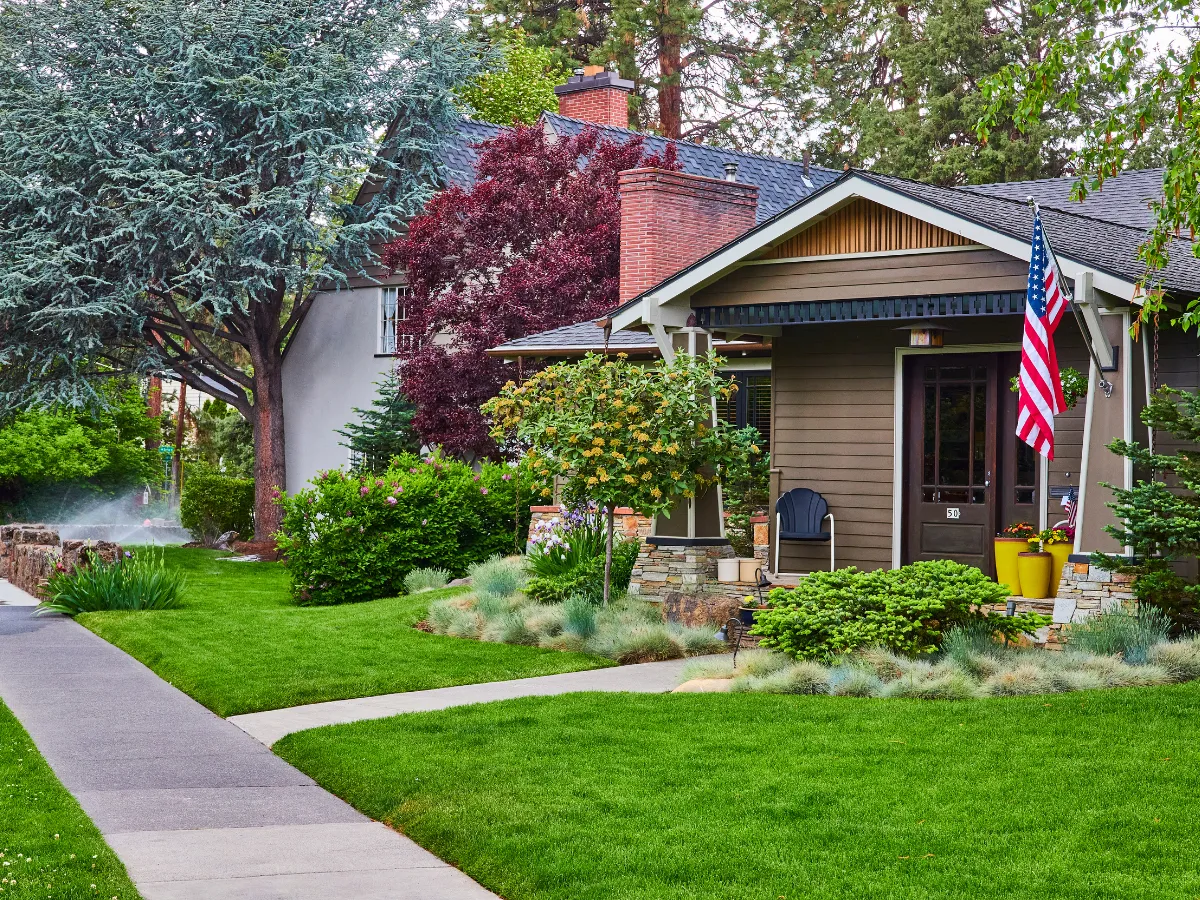
Can a Seller Pay My Closing Costs With a VA Loan in Tri-Cities, WA?
Yes, a seller may be able to pay certain closing costs when you're buying a home with a VA loan in Tri-Cities, WA.
But there's an important distinction I want VA buyers to understand:
The VA allowing a seller to pay a particular cost doesn't mean the seller has to agree to pay it.
We still have to negotiate.
I'm Kim Feliciano, a Tri-Cities, WA REALTOR®, helping buyers and sellers in Richland, Kennewick, Pasco, West Richland, and Benton City.
When I'm helping a VA buyer write an offer, I don't automatically add seller-paid closing costs simply because they're using VA financing.
First I want to know what the buyer actually needs.
Then we look at the property, competition, days on market, purchase price, financing, seller's likely priorities, and everything else we're putting into the offer.
Seller-paid costs are one line item in a much larger negotiation.
Why Would a VA Buyer Ask the Seller to Pay Closing Costs?
Usually, it comes down to cash.
An eligible VA buyer may be able to purchase a home without making a down payment.
That's a valuable benefit.
But as I've said before:
0% down doesn't necessarily mean $0 out of pocket.
There may still be closing costs and prepaid expenses associated with the purchase.
The buyer may also need money during the transaction for things such as earnest money and an independent home inspection.
Then there's the money I don't want buyers forgetting about:
The money they need after closing.
You're about to own a house.
Preserving some cash for emergencies, maintenance, moving expenses, and normal life may be important.
That's one reason asking the seller to contribute toward allowable costs can become part of our offer strategy.
What Are Seller-Paid Closing Costs?
When we talk about seller-paid closing costs, we're generally talking about costs associated with the buyer's purchase that the seller agrees to pay as part of the transaction, subject to the loan program's rules.
Your lender needs to tell us which costs are allowable under your specific VA loan and how much assistance can actually be used.
I'm not going to guess.
That's why I want the lender involved before we write the offer.
If the buyer tells me:
"I need help with closing costs,"
one of my next questions is going to be:
"How much?"
I want an actual number from the lender.
Don't Just Ask for a Random Dollar Amount
This is something I don't love.
A buyer needs help with closing costs, so somebody says:
"Let's ask for $10,000."
Why $10,000?
Does the buyer need $10,000?
Can the buyer use $10,000?
What does the lender estimate?
What happens if the allowable costs are less than what we've requested?
How does the request affect the seller's net?
How does it affect the competitiveness of our offer?
Let's get the numbers first.
Then we can talk strategy.
Closing Costs and Seller Concessions Aren't Exactly the Same Thing
This is where VA terminology can get confusing.
The VA distinguishes between ordinary buyer closing costs that a seller may agree to pay and what the VA specifically defines as seller concessions.
Under current VA guidance, seller concessions are certain payments or benefits the seller provides above and beyond the buyer's normal closing costs.
The VA generally limits seller concessions to 4% of the reasonable value of the property.
That doesn't mean every dollar a seller pays toward the buyer's ordinary closing costs automatically falls under that 4% seller-concession limit.
This is exactly why I want the lender calculating what is allowable for your specific transaction.
You don't need to memorize VA lending rules.
You need the right people on your team who understand them.
The Seller Is Looking at Their Net Too
Here's the part buyers sometimes forget.
If you're asking the seller to pay $10,000 toward your costs, the seller doesn't simply see:
"$420,000 purchase price."
They're also looking at what they actually walk away with.
Let's say two offers are otherwise similar.
One buyer offers $420,000 and asks the seller to contribute $10,000 toward allowable closing costs.
Another buyer offers $415,000 without that same $10,000 request.
Those aren't necessarily $5,000 apart from the seller's perspective.
We need to look at the entire financial picture.
That's why purchase price alone doesn't tell us how strong an offer is.
I Look at the Whole Offer
This is one of my biggest philosophies when negotiating real estate.
We don't evaluate one line item by itself.
I'm looking at:
Purchase price.
Financing.
Earnest money.
Closing date.
Contingencies.
Seller-paid costs.
Property condition.
Competition.
Days on market.
The buyer's goals.
And, as much as we can reasonably understand them, the seller's goals.
Maybe preserving cash is extremely important to my buyer.
Great.
Then seller-paid costs may be more important than getting the absolute lowest possible purchase price.
That's a strategy conversation.
Sometimes Cash in Your Pocket Matters More Than a Slightly Lower Price
Let's use a simple example.
Imagine you're a VA buyer choosing between two possible offer structures.
In one, you negotiate a somewhat lower purchase price but pay your own closing costs.
In another, the purchase price is somewhat higher, but the seller contributes toward allowable closing costs.
Which is better?
I can't answer that based on those two sentences.
We need the lender to calculate it.
How does each option affect your payment?
How much cash do you preserve?
Does the property support the price?
What are the appraisal considerations?
What does the seller care about?
Can you use the requested contribution?
That's why I don't want buyers focusing on purchase price alone.
Seller-Paid Costs Can Help Preserve Your Savings
Let's say you've saved money for your home purchase.
You're eligible for VA financing with no down payment.
Wonderful.
Now let's imagine your closing costs and prepaid expenses are going to use a significant portion of those savings.
Could you pay them yourself?
Maybe.
But should we at least evaluate whether asking the seller to contribute makes sense?
Absolutely.
Because after closing, you may need money for:
Moving.
Furniture.
Repairs.
Home maintenance.
Emergency savings.
Things you discover after living in the house.
And everything else life decides to throw at you.
If we can structure an offer that helps preserve your cash and still makes sense to the seller, that's worth evaluating.
But Asking for Closing Costs Can Affect Your Offer
Here's the other side.
Imagine a new listing hits the market in Richland.
It's priced well.
It's getting significant buyer activity.
Multiple buyers are interested.
You want the house.
And you also want the seller to pay a large portion of your closing costs.
Can we ask?
Potentially.
Does the request affect how the seller evaluates your offer?
It certainly can.
That's why I don't automatically put the same seller-paid-cost request into every VA offer.
We need to understand what we're walking into.
Competition Matters
When a property has multiple offers, every term can matter.
The seller may be comparing:
Price.
Net proceeds.
Financing.
Contingencies.
Closing timeline.
Earnest money.
And other terms.
If preserving your cash is essential, we may still decide to request closing-cost assistance.
That's your decision.
But I want you to understand how that request fits into the overall offer.
My job isn't to tell you:
"You can't ask because there are other offers."
My job is to explain the tradeoffs so you can decide what's important to you.
Days on Market Can Change the Conversation
Now imagine a different house.
It has been sitting on the market.
There haven't been many showings.
Maybe the seller has already adjusted the price.
Maybe they haven't received an offer yet.
That doesn't automatically mean they'll agree to pay your closing costs.
But it's a different negotiating position than a house that hit the market yesterday and has multiple interested buyers.
This is why I evaluate the specific property.
I'm not using the same script on every house.
The Seller's Motivation Matters Too
Sometimes a seller cares primarily about net proceeds.
Sometimes timing is incredibly important.
Maybe they need a particular closing date.
Maybe they've already moved.
Maybe they're purchasing another property.
Maybe certainty matters more to them than squeezing every last dollar out of the transaction.
We don't always know everything motivating the seller.
But when we can learn useful information, it can help us build an offer that tries to solve problems for both sides.
That's negotiation.
VA Buyers Don't Automatically Have "Weak" Offers
This is another misconception I want to get rid of.
Using VA financing doesn't automatically make your offer weak.
As with any financed offer, sellers are going to evaluate the whole package.
Is the buyer well prepared?
Is the lender responsive?
Does the lender understand VA financing?
Is the preapproval solid?
Are the terms clear?
Is the offer positioned thoughtfully?
Are we anticipating potential issues instead of waiting for them to surprise everyone?
That's why I care so much about getting your VA financing organized before we start writing offers.
Your Lender Needs to Be Part of the Offer Strategy
If seller-paid costs are important to you, I want your lender involved.
I need to know:
How much do you actually need?
What costs are allowable?
What does your estimated cash to close look like without seller assistance?
What does it look like with assistance?
Does the requested amount create any issue with the loan?
How does the proposed purchase price affect the financing?
Are there appraisal considerations?
I handle the real estate negotiation.
The lender handles the loan.
Those two sides need to communicate.
What About the VA 4% Seller Concession Rule?
This is probably one of the most misunderstood VA closing-cost topics.
People hear:
"The seller can pay 4%."
Then they assume that means the seller can only pay 4% total toward anything associated with the buyer's closing.
That's not an accurate way to describe the rule.
VA guidance identifies certain seller concessions and generally limits those concessions to 4% of the property's reasonable value.
The VA also explains that payment of the buyer's normal closing costs isn't considered a seller concession for purposes of that 4% calculation.
This is a lending detail I want your VA-experienced lender applying to your actual transaction.
Don't build your offer around a rule you saw summarized in a social media comment.
Can a Seller Pay Off My Debt So I Qualify?
This is where seller concessions can get more complicated.
VA guidance includes certain items beyond ordinary closing costs within its definition of seller concessions, including things such as payment of a buyer's VA funding fee and certain payments involving the buyer's debts or obligations.
That doesn't mean we should automatically structure an offer that way.
It means your lender needs to determine what's permitted, what's useful, and how it affects your qualification and loan.
Again:
Allowed doesn't automatically mean strategically smart.
What If I Don't Need Seller-Paid Closing Costs?
Then don't assume you should ask for them just because you're using a VA loan.
Maybe your priority is purchase price.
Maybe you're competing for a house you really want.
Maybe you have plenty of cash available and would rather strengthen another part of the offer.
Maybe a seller contribution simply doesn't improve your position.
Every buyer is different.
The goal isn't to maximize every concession we can possibly request.
The goal is to build an offer that helps you accomplish what matters to you.
Scenario: VA Buyer Wants to Preserve Cash
Let's say a VA buyer has enough money to cover their estimated closing costs.
But doing so would significantly reduce their savings after closing.
The house has been on the market for a while.
There doesn't appear to be significant competition.
The buyer asks:
"Could we ask the seller to help with my closing costs?"
Yes, that's something we can evaluate.
First, I want the lender to tell us how much assistance the buyer can actually use.
Then I want to look at the property and the offer.
What purchase price makes sense?
What does the seller's likely net look like?
How does the request fit into the rest of our terms?
Then the buyer decides what they want to offer.
Scenario: VA Buyer Is Competing for the House
Now let's change the situation.
The house just came on the market.
The buyer loves it.
Other buyers are interested.
My buyer would prefer seller-paid closing costs, but they don't absolutely need them.
Now we have a decision.
How badly do you want the house?
What happens financially if you pay your own costs?
How much cash will you have left?
How does asking for the contribution affect our positioning?
Would another offer structure better accomplish your goal?
There's no universal right answer.
That's why we talk about it.
Common Mistakes VA Buyers Make With Seller-Paid Costs
One mistake is assuming the seller is required to pay your closing costs because you're using a VA loan.
They're not.
Another is asking for a random amount without knowing what you actually need.
Another is misunderstanding the VA's 4% seller-concession rule.
Another is focusing only on purchase price while ignoring how much cash you'll have left after closing.
Another is assuming seller-paid costs always make an offer weak.
And another is assuming you should always ask for the maximum amount simply because VA rules may permit certain contributions.
Offer strategy should be based on your actual goals and the actual property.
FAQ: VA Seller-Paid Closing Costs in Tri-Cities, WA
Can a seller pay my closing costs with a VA loan?
Yes, sellers may pay certain buyer closing costs in a VA transaction, subject to applicable VA and lender requirements.
Whether the seller agrees to pay them is part of the negotiation.
Is a seller required to pay a VA buyer's closing costs?
No.
The fact that VA rules permit certain seller-paid costs doesn't obligate a seller to agree to them.
The buyer and seller negotiate the contract terms.
Are VA seller concessions limited to 4%?
The VA generally limits what it specifically defines as seller concessions to 4% of the property's reasonable value.
However, VA guidance states that payment of a buyer's normal closing costs isn't considered a seller concession for purposes of that 4% calculation.
Your lender should determine how the rules apply to your transaction.
Can the seller pay my VA funding fee?
The VA includes payment of the buyer's VA funding fee as an example of a seller concession.
Whether that makes sense in your transaction should be discussed with your lender and incorporated into the overall offer strategy.
Should I always ask the seller to pay my closing costs with a VA loan?
No.
Sometimes asking for seller assistance makes sense.
Sometimes it doesn't.
We need to consider your available cash, competition, the property, purchase price, appraisal considerations, seller motivation, and the rest of your offer.
Can I offer a higher price and ask the seller to pay closing costs?
That's a possible offer structure, but it needs to make sense financially and for the property.
The lender needs to evaluate the financing, and the property's appraisal still matters.
A higher contract price doesn't guarantee a higher appraised value.
How much should I ask the seller to pay?
Start with your lender.
Find out how much assistance you actually need and can use.
Then we can decide how that request fits into the overall real estate negotiation.
So, Should You Ask the Seller to Pay Your VA Closing Costs?
Maybe.
That's the answer.
Not because I'm trying to avoid the question, but because your situation determines the strategy.
If paying your own closing costs would wipe out most of your savings, seller assistance may be very important.
If you have plenty of cash but you're competing against several offers for the house you absolutely love, maybe it's less important.
If a home has been sitting on the market and the seller is motivated, we may have more room to negotiate.
If the seller needs a particular closing timeline, maybe there are other terms that matter to them too.
We look at all of it.
I'm Kim Feliciano, a Tri-Cities, WA REALTOR®, and I treat seller-paid costs as one negotiation line item within the entire offer.
My job isn't to automatically ask for everything possible.
It's to understand what you're trying to accomplish and help you build an offer around those goals.
For a VA buyer, that also means working closely with a lender who understands what your benefit allows, what affects your financing, and what could potentially create a problem.
If you're thinking about using your VA home loan benefit to purchase in Richland, Kennewick, Pasco, West Richland, Benton City, or elsewhere in the Tri-Cities, let's get your financing and offer strategy organized before the right house shows up.
Kim Feliciano
Tri-Cities, WA REALTOR®
Helping buyers and sellers navigate the housing market in:
Richland
Kennewick
Pasco
West Richland
Benton City
Website: www.heykimfeliciano.com
Say hello on socials: Instagram | Facebook | TikTok
Monthly market updates: YouTube