
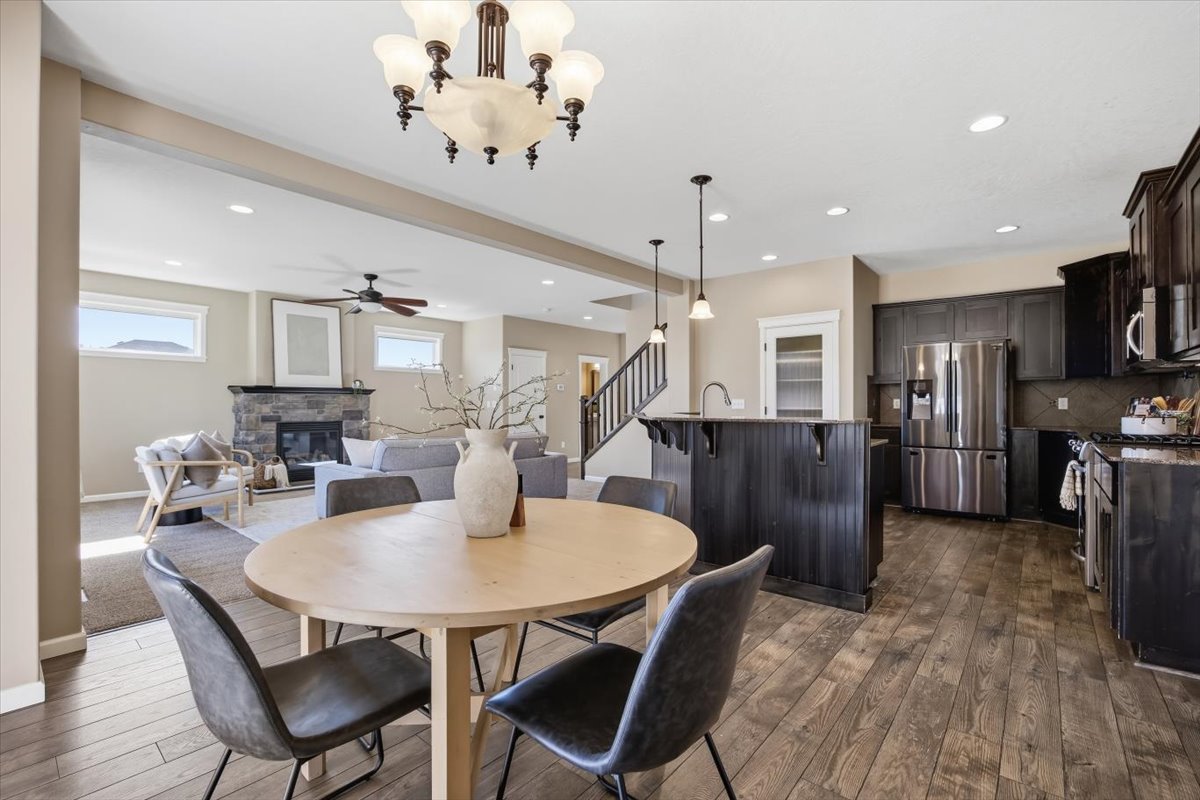
Should I Stage My House Before Selling in Tri-Cities, WA?
If you're getting ready to sell your house in Tri-Cities, WA, you may be wondering whether staging is actually worth it.
Do you need to rent furniture?
Do you need to make every room look like a model home?
What if you still live there?
And is staging really going to make a difference?
Here's how I approach it with my sellers:
Staging is a positioning tool. It isn't a requirement.
I've personally seen the difference it can make. My staged listings have sold, and I've seen them spend less time on the market. That doesn't mean staging guarantees a sale, and it doesn't mean every seller needs to stage every room.
It means staging is one of the tools we can consider when deciding how we want your home positioned against the competition.
I'm Kim Feliciano, a Tri-Cities, WA REALTOR®, helping buyers and sellers in Richland, Kennewick, Pasco, West Richland, and Benton City.
I've sold real estate in two Greater Seattle-area markets as well as here locally in the Tri-Cities, and one thing I've learned is that sellers benefit from understanding their choices instead of being handed a list of things they supposedly "have to" do.
It's your house.
I can show you what I've seen work, explain the strategy, and make recommendations.
You decide.
What Does Staging a House Actually Mean?
When people hear "staging," they often picture an empty luxury home being filled from top to bottom with rented furniture, artwork, pillows, and décor.
That can be staging.
But that's not the only way to do it.
Staging can also mean selectively furnishing the areas of a vacant home that matter most.
For an occupied home, it can mean working with furniture and belongings that are already there while changing how the home is presented.
Sometimes we remove things.
Sometimes we rearrange things.
Sometimes we simplify.
Sometimes we focus our attention on only a few important spaces.
Not every room has to be staged.
The question isn't whether we can make your house look like a furniture showroom.
The question is:
How do we want buyers to experience this house when they walk through the door?
I Call Staging the "Look Over Here" Tactic
This is probably the simplest way I can explain why I think staging works.
It's the "look over here" tactic.
And yes, I've seen it work.
Staging gives the buyer's eye somewhere to go.
Maybe it's a well-positioned living room.
Maybe it's the dining area.
Maybe it's the primary bedroom.
Maybe it's a feature of the home we want buyers to notice and remember.
You're helping create an experience rather than leaving everything about the buyer's attention to chance.
That doesn't mean we're trying to hide something.
It means we're intentionally presenting the property we're trying to sell.
There's a difference.
Vacant Homes and Occupied Homes Need Different Strategies
This is something sellers don't always consider.
A vacant home and an occupied home give buyers completely different experiences.
If you're still living in the house, buyers have plenty to look at.
There's furniture.
Artwork.
Décor.
Personal belongings.
Everyday items.
Lifestyle choices.
Their eyes are constantly taking in information.
A vacant house is the opposite.
There's nothing else to look at.
And when there's nothing else to look at, buyers can start looking harder at the house itself.
What Happens When Buyers Walk Into a Vacant House?
Think about walking into an empty living room.
There's no couch.
No rug.
No artwork.
No coffee table.
Nothing showing you how the room might function.
So what do your eyes do?
They may start studying the flooring.
The walls.
The corners.
The trim.
The little condition items.
The size and shape of the room.
The things you might not have spent as much time examining if the space had been visually defined.
Again, staging isn't about covering up problems.
It's about giving the buyer another way to experience the room.
Furniture can help establish scale.
It can show how a space might function.
It can help a buyer imagine actually living there.
And it can give their eyes somewhere intentional to go.
Does Every Room in a Vacant House Need to Be Staged?
No.
This is where I want sellers to know they have choices.
We can look at the house and decide where staging may have the most impact.
Maybe that's the living room and dining area.
Maybe the primary bedroom needs some help showing scale.
Maybe there's an awkward space where buyers may struggle to understand how they would use it.
We can focus on the areas that matter most rather than automatically deciding every single room needs furniture.
A secondary bedroom may not need the same attention as the main living area.
An obvious bedroom doesn't necessarily need to be fully decorated for buyers to understand what it is.
Selective staging can still be strategic staging.
What About an Owner-Occupied Home?
This is a completely different conversation.
If you're living in the home while we're selling it, I'm not expecting you to pretend nobody lives there.
You have a life.
You have things.
Maybe you have kids.
Maybe you have pets.
Maybe your kitchen counters contain the things you actually use every morning.
That's normal.
But there's a phrase I use with sellers:
How we live in a home is not how we sell a home.
Those are two different things.
How We Live Isn't How We Sell
Think about your kitchen.
When you're living there, it makes perfect sense to have your coffee maker, toaster, paper towels, vitamins, mail, dish soap, charging cords, and whatever else you use regularly sitting where it's convenient.
You're living in the house.
Convenience matters.
But when we're selling, we're asking buyers to evaluate the kitchen.
Now all those everyday things are competing for their attention.
The buyer isn't seeing only the countertop.
They're seeing everything sitting on it.
That doesn't mean your stuff is bad.
It means we're trying to sell the house rather than your daily routine.
So we may prep the space differently.
Staging an Occupied Home Isn't About Erasing Your Personality
I don't need your home to become sterile.
I also don't think every occupied home needs to look exactly the same.
We're trying to create a balance.
The home still needs to function for you while it's listed.
At the same time, we're inviting buyers into the property and asking them to imagine making it theirs.
That may mean reducing some visual clutter.
It may mean rearranging furniture.
It may mean putting away some everyday items before showings.
It may mean simplifying certain rooms.
Every house is different.
Every seller is different.
That's why I walk through the choices rather than handing everyone the same staging checklist and calling it done.
Your Motivation Matters More Than People Realize
Before deciding how aggressively we prepare and position a home, I want to understand the seller's motivation.
Why are you selling?
And:
How quickly do you want to be on and off the market?
Those questions matter.
If you tell me you don't care whether it takes six months to sell, that's useful information.
If you tell me:
"Kim, I need to get this house sold. I have somewhere else I need to be."
That's useful information too.
Your pricing, preparation, and positioning should make sense in relation to your actual goal.
What doesn't make sense is telling me you need to sell quickly while making choices that make it harder for the house to compete.
The Tri-Cities Isn't One Single Market
This is especially important right now.
People say "the Tri-Cities market" as if every home from Benton City to Richland is competing under identical conditions.
They're not.
At the time I'm writing this article, I'm looking at an absorption rate of approximately 10.0% in Benton City and approximately 23.3% in Richland based on the market data I'm using.
Those numbers will change, so if you're reading this later, don't use them as today's market statistics.
What's important is what they tell us at the time of this article.
The two markets aren't behaving exactly the same.
At those levels, I'm looking at Benton City as a buyer's market while Richland is behaving more like a balanced market.
That affects how I think about positioning.
What Does Absorption Rate Have to Do With Staging?
Absorption rate helps us understand how quickly available inventory is being absorbed by buyers.
You don't need to become a real estate statistician to sell your house.
But as your REALTOR®, I need to understand what the data is telling us.
If buyers have more choices, your home has more competition for their attention.
That's where positioning becomes incredibly important.
Price matters.
Condition matters.
Presentation matters.
Marketing matters.
Accessibility for showings matters.
And staging can be one of the tools we use to help the property compete.
I'm Seeing Days on Market Climb When Homes Aren't Positioned Correctly
This is where sellers need to pay attention to what's actually happening around them rather than what the market was doing a few years ago.
I'm easily seeing days on market hike up on homes that aren't priced and positioned correctly.
That doesn't mean every home sitting on the market has the same problem.
Real estate isn't that simple.
But when buyers have choices, sellers have to understand that putting a sign in the yard and waiting isn't much of a strategy.
I evaluate my listings weekly because I don't believe in waiting 30 days to acknowledge signs that were already there weeks ago.
The market gives us information.
We need to use it.
Staging Can't Fix the Wrong Price
This is an important limitation.
You can stage a house beautifully and still price it incorrectly.
A gorgeous sofa doesn't fix an unrealistic asking price.
That's why I talk about pricing and positioning together.
Staging is a tool.
Photography is a tool.
Marketing is a tool.
Preparation is a tool.
Price is a major part of the equation.
They need to work together.
If a seller wants to test an aggressive price while doing very little to prepare the property, that's their choice.
My job is to explain what I think the risks are before we do it.
Staging Doesn't Guarantee Your House Will Sell
I want to be careful here because my personal experiences aren't a guarantee of what will happen with somebody else's home.
I've had success with staged listings.
I've seen those homes spend less time on the market.
My staged listings have sold.
That experience absolutely influences the recommendations I make to sellers.
But I can't tell you:
"If you stage your house, it will definitely sell."
Nobody should promise you that.
There are too many variables involved.
What I can tell you is that staging is a positioning tactic I've personally seen work.
Then we decide whether it makes sense for your property.
Scenario: Selling a Vacant Home in Richland
Let's say you've already moved out of your Richland home.
The house is completely empty.
The living room is large, but without furniture it actually feels difficult to understand.
Buyers walk in and aren't quite sure where the sofa would go.
The dining space blends into another area.
The primary bedroom looks smaller without anything establishing scale.
We could leave it empty.
That's a choice.
Or we could discuss selectively staging the main spaces.
Maybe we don't touch every secondary bedroom.
Maybe we don't stage every corner.
Instead, we focus on the rooms that help buyers understand how the home lives.
That's a strategic decision.
Scenario: You're Still Living in Your Kennewick Home
Now imagine you're selling a house in Kennewick and you're still living there.
We're not bringing in an entire second house worth of furniture.
Instead, we walk through what you already have.
Maybe a room feels crowded because there are two oversized chairs we don't need for marketing.
Maybe the kitchen has a lot happening on the counters.
Maybe there's a spare room that's functioning as storage but could be presented more clearly.
Maybe the furniture arrangement makes the living room feel smaller than it actually is.
We're not criticizing how you live.
We're preparing the house for a different purpose.
We're selling it.
Staging Is Really About Buyer Attention
This is the part I want sellers to remember.
When buyers walk into your house, their attention is going somewhere.
The question is:
Where?
What do they notice first?
What do they remember after leaving?
What do they see in the listing photos before they ever schedule the showing?
Do they understand the rooms?
Can they picture how the house functions?
Are they distracted by things that don't help us sell the property?
Staging gives us another way to influence that experience.
That's why I call it the "look over here" tactic.
What If I Don't Want to Stage My House?
Then we don't automatically stage your house.
It's your choice.
I don't believe my job is to walk into your house and start issuing commands.
My job is to evaluate the property, understand your goals, look at what's happening in your market, and explain the options available to you.
I may recommend staging.
I may recommend selective staging.
For an occupied home, I may recommend changes using primarily what you already own.
Then we discuss the pros and cons.
The seller makes the decision.
Always.
What If I Don't Want to Spend Money on Staging?
Tell me.
That's part of the conversation.
Every seller has a different budget, timeline, and reason for selling.
We can look at where staging may have the greatest impact and decide whether selective staging makes more sense.
There may also be preparation we can do in an occupied home without turning the process into a major staging expense.
The point isn't:
"Spend money because that's what sellers are supposed to do."
The point is:
What are we trying to accomplish, and what's the best way to position this particular house to accomplish it?
Should I Stage Before Listing Photos?
If we're going to stage, I want that decision made before we're marketing the home.
Remember, the buyer's first showing may not happen at your front door.
It may happen on their phone.
They're scrolling through homes.
They see one listing.
Then another.
Then another.
Your photos are competing for their attention before they've ever stepped inside your house.
That's another reason presentation matters.
We aren't only staging for the physical showing.
We're thinking about how the home presents online too.
Common Staging Mistakes I See Sellers Make
One mistake is assuming staging means every room needs rented furniture.
It doesn't.
Another is assuming a vacant home doesn't need staging because "buyers can imagine what goes there."
Some buyers can.
Others may have difficulty understanding scale or how an empty space functions.
Another mistake is confusing staging with hiding condition issues.
That's not the goal.
And another is spending so much time thinking about staging that we ignore the bigger positioning picture.
A staged house still needs an appropriate pricing and marketing strategy.
FAQ: Staging a Home in Tri-Cities, WA
Do I have to stage my house before selling in Tri-Cities, WA?
No. I don't treat staging as a requirement.
I treat it as one of the positioning choices we can discuss before listing your home. I'll make recommendations based on the property, market, your goals, and my experience, but the decision belongs to you.
Do I have to stage every room?
No.
Selective staging may make sense. We can focus on the spaces where staging is likely to have the most impact rather than assuming every single room needs furniture and décor.
Is staging more important for a vacant home?
Vacant homes create a different buyer experience because there's nothing else in the room competing for attention.
That can cause buyers to look more closely at condition and can sometimes make it harder to understand the scale or purpose of a space.
Strategic staging can help define important rooms.
What if I'm living in the home while selling?
Then we approach the home differently.
We can work with your existing furniture and belongings while preparing the property for buyers.
Remember:
How we live in a home is not how we sell a home.
You still need to live there. We're simply trying to present the property intentionally while it's on the market.
Will staging make my house sell faster?
I've personally had success with staged listings, and my staged listings have sold while spending less time on the market.
That's my experience, not a guarantee of what will happen with every property.
Your price, condition, location, competition, marketing, and current market conditions all matter too.
Can staging fix an overpriced house?
Staging can improve presentation, but I wouldn't use it as a substitute for an appropriate pricing strategy.
I want price, preparation, presentation, and marketing working together.
Is staging worth the money?
That depends on the house and the seller.
I want to look at your goals, current competition, whether the home is occupied or vacant, and where staging could potentially have the greatest impact.
Then you can decide whether the investment makes sense to you.
So, Should You Stage Your Tri-Cities Home Before Selling?
Maybe.
And I know that's not the dramatic yes-or-no answer people expect.
But it's the answer I give sellers because it's their house and their decision.
I believe in staging as a positioning tool because I've personally seen it work.
I call it the "look over here" tactic.
For a vacant home, staging can give buyers visual direction and help them understand how important spaces function.
For an occupied home, we're approaching things differently because everyday belongings and lifestyle choices are already part of what buyers see.
Sometimes we stage selectively.
Sometimes we work primarily with what the seller already owns.
Not every room has to be staged.
And staging isn't a requirement.
What I want to know first is:
Why are you selling, and how quickly do you want to get where you're going?
Because your motivation should influence the decisions we make about pricing, preparation, and positioning.
Especially when I'm seeing days on market increase for homes that aren't positioned correctly, I don't want to put your house on the market and simply hope buyers figure out why they should choose it.
I want a strategy.
I'll show you the options.
I'll tell you what I've seen work.
I'll make my recommendations.
Then you decide.
If you're thinking about selling in Richland, Kennewick, Pasco, West Richland, Benton City, or elsewhere in the Tri-Cities, I'll walk through your home with you and help you decide what preparation actually makes sense before we put it on the market.
Kim Feliciano
Tri-Cities, WA REALTOR®
Helping buyers and sellers navigate the housing market in:
Richland
Kennewick
Pasco
West Richland
Benton City
Website: www.heykimfeliciano.com
Say hello on socials: Instagram | Facebook | TikTok
Monthly market updates: YouTube