
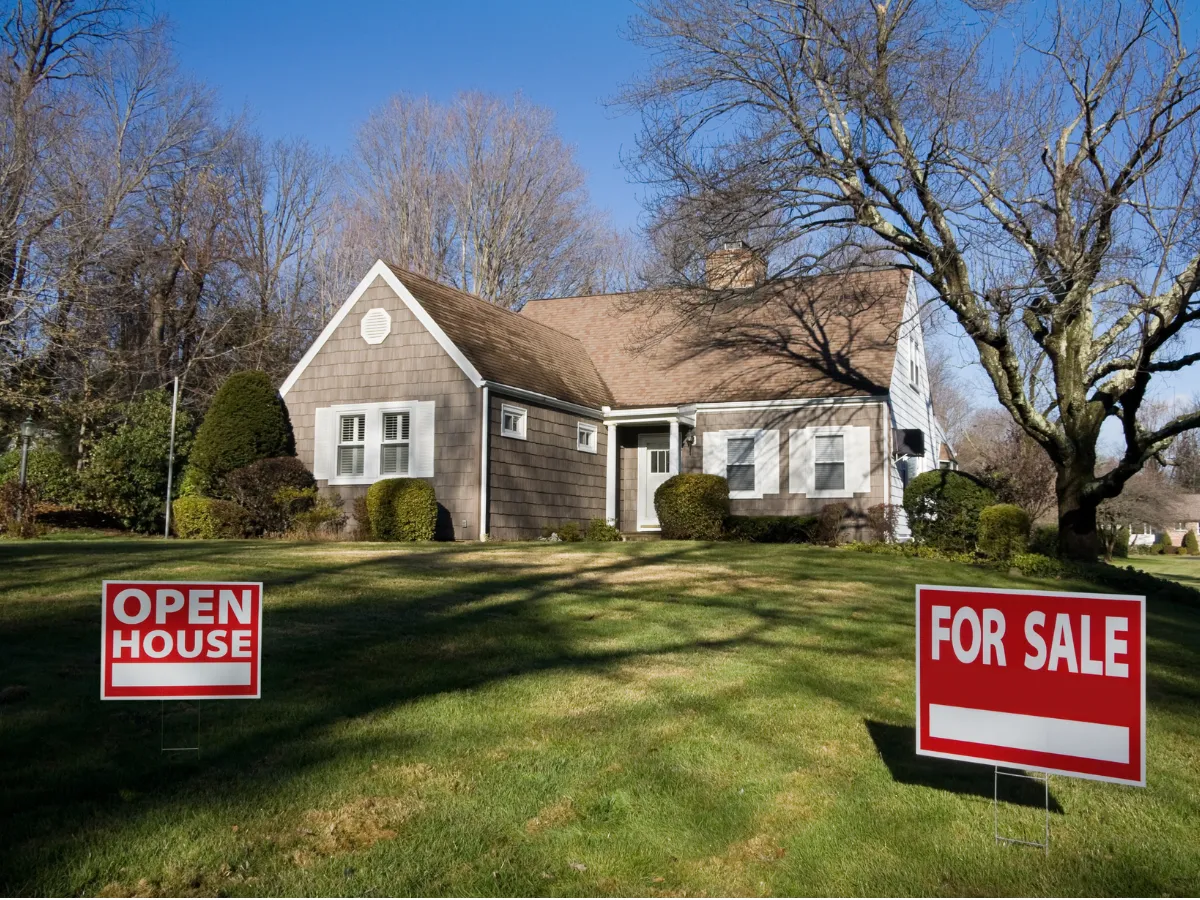
What Happens If My Tri-Cities Home Listing Expires Without Selling?
Your house has been on the market.
You've cleaned it for showings.
You've left the house so buyers could walk through.
You've watched people save it online.
Maybe you've had showings but no offers.
Maybe you've had almost no activity at all.
And now the expiration date on your listing agreement is getting closer.
So what actually happens if your Tri-Cities home listing expires without selling?
First, an expired listing doesn't mean your house is unsellable.
But I also wouldn't simply put the house back on the market exactly the same way and hope for a different result.
If your house didn't sell the first time, I don't want to simply put it back online and hope different buyers magically appear. I want to know what the first listing taught us.
I'm Kim Feliciano, a REALTOR® in the Tri-Cities helping buyers and sellers in Richland, Kennewick, Pasco, West Richland and Benton City.
If your listing is approaching its expiration date, this is a good time to stop looking at the experience as a failure and start looking at the information it gave you.
Because your first listing probably told us quite a bit.
What Does It Mean When a Home Listing Expires?
When you list your house with a real estate brokerage, your listing agreement has terms, including the period during which the brokerage is authorized to market the property.
If the home doesn't sell during that period and the agreement reaches its expiration date without being extended or otherwise modified, the listing may expire.
But don't make assumptions about your specific agreement based on a general explanation online.
Read what you signed.
If you have questions about your contractual obligations or anything that may continue after expiration, review the agreement with the appropriate real estate or legal professional.
The signed agreement matters.
Can I Relist My House After the Listing Expires?
Potentially, yes.
But I think there's a more useful question:
Should you relist it exactly the same way?
If the house was listed for months without selling, something happened.
Buyers saw it.
Agents saw it.
The market had an opportunity to respond.
Before relisting, I want to understand that response.
Otherwise, we're hitting reset on the listing without resetting the strategy.
Start With the Data From the First Listing
One of the first things I'd want to review is what actually happened while the home was active.
How many showings did you have?
How many people viewed the property online?
How many saved or shared it?
Were buyers clicking on the listing but not scheduling showings?
Did you have lots of showings but no offers?
What feedback did buyer agents provide?
Did you receive any offers?
What happened with comparable properties during the same period?
Did competing homes reduce their prices?
Which homes went pending?
Which homes sold?
Which homes are still sitting?
That information matters.
Lots of Online Views but Few Showings
Suppose your listing received plenty of online attention.
People saw it.
But very few buyers scheduled a showing.
That's useful information.
Something stopped them between:
“I see this house online.”
and:
“I want to go inside.”
Maybe it was price.
Maybe it was presentation.
Maybe the photographs didn't communicate the property well.
Maybe buyers didn't see enough value compared with other available homes.
Maybe a property characteristic narrowed the buyer pool.
I don't want to guess.
I want to compare the activity with what was happening in the market at the same time.
Lots of Showings but No Offers
Now we have a different pattern.
If buyers repeatedly walked through the property but nobody wrote an offer, they were interested enough to see it.
Something changed once they got there.
Maybe the condition didn't match expectations.
Maybe rooms felt different from the photographs.
Maybe buyers consistently preferred another property at the same price.
Maybe the house needed work they weren't expecting.
Maybe they liked it but didn't like it enough at the asking price.
This is where patterns become valuable.
One buyer's opinion is one opinion.
Repeated buyer behavior is something I pay attention to.
What If We Didn't Get Much Feedback?
This frustrates sellers.
You've cleaned the house.
You've left for a showing.
Then you want to know:
“What did they think?”
I follow up with buyer agents.
But we don't always get detailed feedback.
And sometimes the most useful feedback isn't a comment.
It's behavior.
The buyer saw the house and didn't write an offer.
If that happens repeatedly, that's information too.
No feedback is feedback.
I'm interested in the pattern.
Was the Price the Problem?
Maybe.
But I don't automatically blame price every time a house doesn't sell.
I want to see the evidence.
How did the home compare with similar properties?
What was active while you were listed?
What sold?
What went pending?
Were comparable homes making price reductions?
Did your home receive showings after price changes?
How did condition compare?
What were buyers getting elsewhere for similar money?
Price is one of the most powerful things a seller can change.
That doesn't mean it's always the only problem.
Don't Base the Next Price on What You “Need”
This can be difficult.
Maybe you need a certain amount from the sale to make your next move.
I absolutely want to know that.
Your goals matter.
But the buyer isn't deciding what to pay based on the amount you need.
They're comparing your house with their other options.
That's why I like preparing a seller net sheet.
We can estimate what different sale prices may mean to you financially.
Then you can make decisions with actual numbers instead of choosing a list price simply because it's the number you hope to walk away with.
Did the House Compete With New Construction?
This is particularly important in parts of the Tri-Cities.
A resale seller may think their competition is the house three doors down.
The buyer may be thinking differently.
They could be comparing your home with new construction.
A builder may be offering incentives.
The new house may have different features.
Your resale home may have advantages too.
Maybe you already have:
Fencing.
Landscaping.
Blinds.
A finished backyard.
Established trees.
Appliances.
A larger lot.
A neighborhood the buyer prefers.
We need to understand what buyers were comparing, not just what we considered comparable.
Did the Marketing Give the House a Real Chance?
This is another part of the review.
How was the home presented online?
Were professional photographs used?
Was the description useful?
Did buyers have enough information?
Was there video when it made sense?
Drone photography?
Floor plans?
A 3D tour?
Was the property marketed beyond simply putting it into the MLS and waiting?
Professional photography is part of my listing service.
Depending on the property, I may also use video, drone photography, estimated boundary outlines, 3D tours, floor plans and other marketing tools.
Your first showing is often online.
I want that first impression working for us.
Marketing Can't Fix Everything
At the same time, I don't want to pretend better marketing can overcome every issue.
Beautiful photographs can't make an overpriced house appropriately priced.
A great video can't make a buyer ignore a property condition that matters to them.
Advertising can't force someone to buy.
Marketing gets attention.
The property still has to compete once we have it.
That's why pricing, condition, presentation and marketing work together.
Was the House Easy to Show?
This is something else I'd review.
How difficult was it for buyers to get inside?
Did showings require a lot of notice?
Were there limited showing windows?
Were buyers regularly unable to schedule?
Were pets creating restrictions?
Did the seller need to be home?
Life happens.
I understand that.
I've worked with sellers who have kids, pets, work schedules and all kinds of circumstances.
I'm not asking you to stop living because your house is for sale.
But if showing restrictions affected buyer access, I want to know that before we relist.
Then we can build a more sustainable plan.
Did the House Show the Way It Photographed?
This matters.
A buyer may fall in love with the listing online and feel completely different when they walk through the front door.
Maybe the house was darker than expected.
Maybe there was too much furniture.
Maybe rooms felt smaller.
Maybe there was an odor.
Maybe the yard needed attention.
Maybe deferred maintenance became more noticeable in person.
That doesn't automatically mean you need to remodel your house.
Sometimes relatively simple changes improve presentation.
Other times the best strategy is simply acknowledging the condition through price and positioning.
Do I Need to Fix Everything Before Relisting?
No.
We've talked about this before.
The question isn't:
“What can I fix?”
There will almost always be something you could spend money on.
The better question is:
“Will fixing this increase the likelihood of selling the property or meaningfully improve my outcome?”
Maybe we identify something worth addressing.
Maybe we don't.
I don't want you spending thousands of dollars because your listing expired and now you're panicking.
Let's understand the problem first.
Should I Take a Break Before Relisting?
Maybe.
But again:
What does the break accomplish?
If you need time to move, repair something, clean up the property or change your plans, a break may serve a purpose.
If you're simply taking the house off the market for a short period because you're hoping buyers will forget they already saw it, that's not much of a strategy.
Buyers and their agents have access to information.
The more useful question is whether we're making a meaningful change before going back to market.
Will Relisting Make My House Look Brand New Online?
Don't build your strategy around trying to fool buyers into thinking a property has never been listed.
Serious buyers may have already seen it.
Buyer agents may recognize it.
Listing history and other property information may be available through real estate systems and public sources.
I'm much more interested in giving buyers a legitimate reason to look again.
Maybe the price changed.
Maybe the condition changed.
Maybe the presentation changed.
Maybe the terms changed.
Maybe the market changed.
What's different this time?
That's the question.
Should I Change Real Estate Agents?
That's your decision.
Sometimes an expired listing causes a seller to reconsider the representation they want.
If you're interviewing another REALTOR®, I would ask more than:
“What price would you list my house for?”
That's easy.
Ask:
What do you think happened the first time?
What data supports your recommended price?
How will you market the property?
How often will we review the strategy?
What happens if buyers aren't responding?
How will you communicate with me?
What would you change?
You don't need somebody to simply tell you the highest number.
You need a plan.
Be Careful With the Agent Who Gives You the Number You Want to Hear
This can happen when sellers interview agents.
One person says the home is likely around $450,000.
Another says $475,000.
Another says $525,000.
Naturally, $525,000 sounds fantastic.
But I want to know:
What's the data?
A higher suggested list price doesn't automatically mean a higher eventual sale price.
If the market doesn't support the number, buyers get a vote.
Before becoming a REALTOR®, I worked in mass appraisal.
That background is one reason I'm naturally curious about the characteristics of the property and the available market data.
I'm not performing an appraisal when I'm acting as your REALTOR®.
But I'm also not interested in pulling a number out of thin air because it's the one a seller wants to hear.
What If We Already Reduced the Price Several Times?
Then I want to look at how those reductions were handled.
How large were they?
When were they made?
Where did each new price position the property?
Did buyer activity change afterward?
Did the reduction move the house into another search range?
How did competing listings change during the same period?
Tiny reductions made repeatedly without a clear purpose can become frustrating.
If we're changing the price, I want the new price to have a job.
What If We Had an Offer but It Fell Apart?
That's different from a listing that never generated interest.
Now I want to understand why the transaction failed.
Inspection?
Financing?
Appraisal?
Buyer circumstances?
Home sale contingency?
Something unrelated to the property?
I've had a listing go under contract multiple times before finally closing.
One buyer canceled because of a personal emergency.
Another buyer's financing failed.
The eventual buyer had a home-sale contingency and ultimately closed.
Those situations didn't all tell me the same thing about the house.
That's why the reason matters.
Go Back to Buyers Who Already Showed Interest
If a transaction falls apart and the property returns to the market, one of the first groups I think about is the buyers who already physically toured the house.
They were interested enough to walk through it.
I've had situations where I've immediately contacted buyer agents who previously showed a property after a contract failed.
That strategy has helped generate another offer in my own experience.
It's not a guarantee.
But I'm not always starting from zero.
Sometimes our most useful audience is already in the showing history.
What If My Listing Expired After Months on the Market?
Now I want a very honest review.
Not a blame session.
Not:
“The buyers were wrong.”
Not:
“The market is terrible.”
Not:
“The agent didn't do anything.”
Maybe one of those factors played a role.
But let's get specific.
What did buyers actually do?
What happened with competing homes?
How did the market change?
What did the online analytics show?
What feedback patterns emerged?
What changed during the listing?
Where did our strategy work?
Where didn't it?
That's useful.
Your Old Listing Is Market Research
This is how I want sellers to think about it.
The listing that didn't sell generated information.
Buyers interacted with it.
Agents interacted with it.
Competing homes sold around it.
Other homes sat.
Prices changed.
Offers may have come in.
Maybe buyers repeatedly raised the same objection.
That's market research.
Use it.
Don't throw it away because the listing expired.
Scenario: Plenty of Views, Almost No Showings
Let's say your home was online for 60 days.
It received thousands of views.
Very few people scheduled showings.
Now you're thinking about relisting at the exact same price with new photos.
Could new photos help?
Possibly.
But I'm going to investigate price and positioning too.
If buyers saw the house online and repeatedly decided it wasn't worth seeing in person, I want to understand why before we go back to market.
Scenario: Lots of Showings, No Offers
Different problem.
Buyers liked the online listing enough to come inside.
But nobody wrote.
Now we're looking at what happened once they experienced the property.
Condition?
Price compared with what they saw elsewhere?
Layout?
Deferred maintenance?
Something about the location?
Repeated feedback?
The solution might be different from the first scenario.
Scenario: Your Listing Expired but the Market Changed
Maybe the house was listed during one market environment and several months have passed.
Inventory changed.
Mortgage rates changed.
Comparable sales changed.
Competition changed.
Buyer behavior changed.
Now we need a fresh analysis.
I don't want to blindly copy the old pricing strategy just because that's what we used before.
Today's market gets today's conversation.
Common Mistakes After a Listing Expires
One mistake is assuming the house is unsellable.
Another is immediately blaming one thing without reviewing the data.
Another is relisting at exactly the same price with exactly the same strategy.
Another is choosing the next list price based entirely on what you need to net.
Another is hiring whoever suggests the highest price without asking how they arrived at it.
Another is making expensive improvements before identifying what actually stopped buyers.
Another is assuming a new listing date automatically fixes buyer perception.
Another is ignoring all the showing, feedback and online activity from the first listing.
And one of the biggest mistakes is treating the expired listing like wasted time.
It gave us information.
Let's use it.
FAQ: Expired Home Listings in Tri-Cities, WA
What happens when my real estate listing expires?
Generally, the listing reaches the end of the term stated in the listing agreement. Your specific agreement controls, so review what you signed and ask the appropriate professional about any obligations that may continue afterward.
Can I relist my house after it expires?
Potentially, yes. Before relisting, review the prior listing's performance and determine what, if anything, should change.
Should I lower my price when I relist?
Not automatically. Review comparable sales, current competition, buyer activity, showing history and feedback first. If price was part of the problem, the new pricing strategy should have a clear purpose.
Should I wait before putting my house back on the market?
Maybe, if waiting accomplishes something useful. That could include repairs, moving, preparing the property or responding to changing circumstances. Simply waiting to make the listing appear different isn't much of a strategy by itself.
Do I need to fix my house before relisting?
Not necessarily. Identify whether specific improvements are likely to improve your selling position before spending money.
Should I hire a different REALTOR® after my listing expires?
That's your decision. If you're interviewing agents, ask what they believe happened during the first listing, what data supports their recommendations and what they would actually do differently.
Does an expired listing mean my house is overpriced?
Not automatically. Price may be one factor, but condition, presentation, competition, showing accessibility, marketing and changing market conditions can all affect the outcome.
Can buyers see that my house was listed before?
Property and listing history may be available to real estate professionals and through various data sources. I wouldn't build a relisting strategy around trying to make buyers believe the property has never been offered for sale.
Don't Just Relist It. Learn From It.
If your Tri-Cities home listing expires, I don't want your first reaction to be:
“Let's put it right back up.”
And I don't want it to be:
“I guess nobody wants my house.”
I want to know what happened.
How many people saw it?
How many toured it?
What did buyers choose instead?
What sold?
What didn't?
What did the market tell us about price?
What did it tell us about condition?
What did it tell us about presentation?
What did it tell us about buyer expectations?
Then we decide what comes next.
Maybe we relist quickly.
Maybe we make a change first.
Maybe we adjust the price.
Maybe we change the presentation.
Maybe we wait because waiting actually serves a purpose.
It's your house.
You make that decision.
I'm Kim Feliciano, a REALTOR® in the Tri-Cities helping buyers and sellers in Richland, Kennewick, Pasco, West Richland and Benton City.
I evaluate my listings weekly because I don't believe in waiting 30 days to discover something the market was already showing us weeks earlier.
An expired listing gives us even more information to work with.
If your house didn't sell the first time, I don't want to simply put it back online and hope different buyers magically appear. I want to know what the first listing taught us.
Then we build the next strategy from there.
Kim Feliciano
Tri-Cities, WA REALTOR®
Helping buyers and sellers navigate the housing market in:
Richland
Kennewick
Pasco
West Richland
Benton City
Website: www.heykimfeliciano.com
Say hello on socials: Instagram | Facebook | TikTok
Monthly market updates: YouTube