
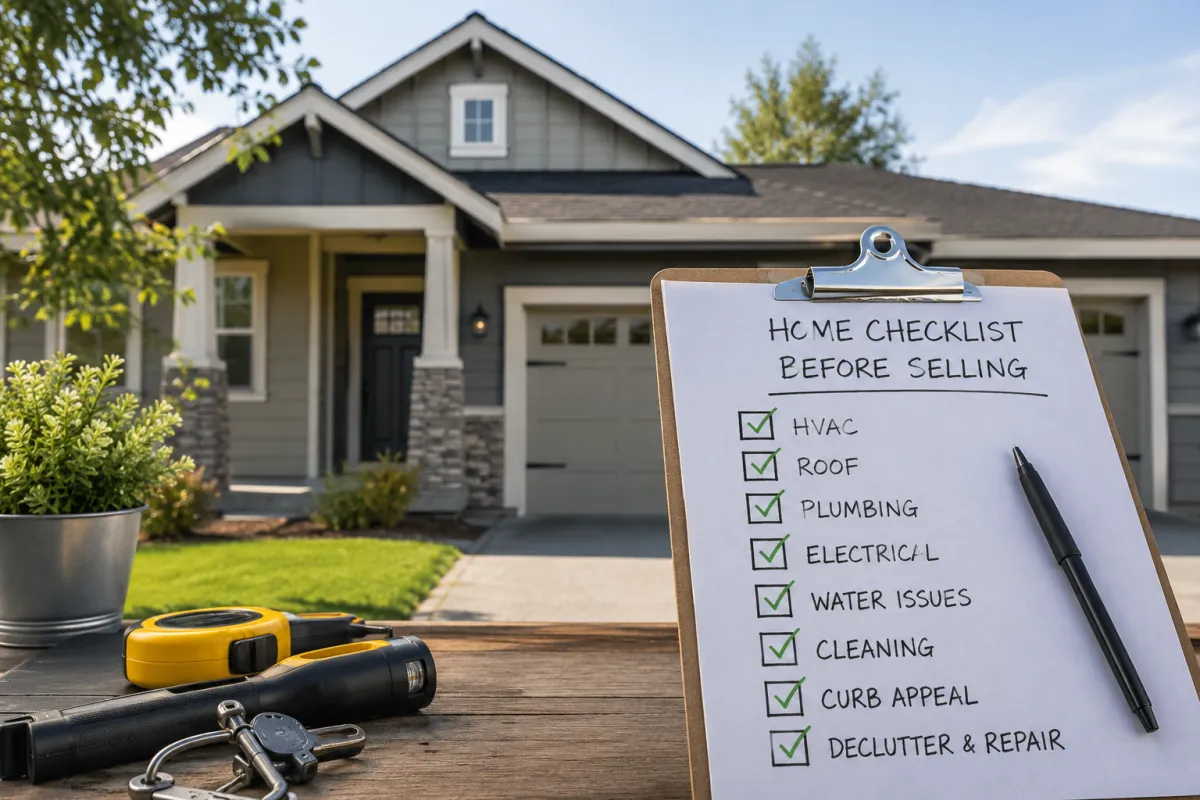
What Should You Fix Before Selling Your Home in Tri-Cities, WA?
What Should You Fix Before Selling Your Home in Tri-Cities, WA?
If you're thinking about selling your home in Tri-Cities, Washington, you may already have a list of projects running through your head.
Paint the kitchen cabinets.
Replace the countertops.
Put in new flooring.
Update the bathroom.
Landscape the backyard.
But before you spend thousands of dollars making your house prettier, I want you to look at something else first:
What could become a problem when a buyer, home inspector, appraiser, or lender gets involved?
I'm Kim Feliciano, a Tri-Cities, WA REALTOR®, and when I walk through a home with someone who's considering selling, I'm not only looking at whether the house photographs well.
I'm looking at condition.
I'm thinking about the roof.
The HVAC system.
Plumbing.
Water issues.
Deferred maintenance.
And then, yes, I'm looking at how clean and presentable the home is.
Because a beautiful kitchen doesn't make an aging roof disappear.
And spending $20,000 on cosmetic upgrades isn't necessarily the best use of your money if there are more important issues buyers are likely to notice later.
So, what should you actually fix before selling a home in the Tri-Cities?
Let's start with what matters most.
First: Don't Renovate Anything Yet
This might save you some money.
Before calling contractors, ordering flooring or picking out backsplash, have someone who understands the local real estate market walk through your house.
Not every home needs to be remodeled before it's sold.
In fact, sometimes sellers spend money on improvements they didn't need to make.
I've seen the mindset:
"We have to redo the kitchen before we sell."
Why?
If the kitchen is functional, clean and appropriate for the home's price point, putting a large amount of money into remodeling it may not produce the return you're expecting.
The same goes for bathrooms, flooring and other cosmetic projects.
Before deciding what to change, we need to understand:
What condition is the home currently in?
Who is the likely buyer?
What price range are we targeting?
What will buyers compare this home with?
What issues could affect the transaction?
Then we decide where your money is best spent.
I Look at a Home Through the Lens of an Inspector
When I'm preparing to sell a house, I try to look past the furniture and decorations.
I'm thinking ahead.
What's an inspector likely to notice?
What could concern a buyer?
What could potentially create a financing issue?
What has been deferred?
That doesn't mean we need to fix every little thing.
Homes aren't perfect.
Even brand-new homes aren't perfect.
But there is a big difference between a loose cabinet handle and an active plumbing leak.
That's why I prioritize condition before cosmetics.
Start With the HVAC System
Tri-Cities summers are hot.
Air conditioning matters here.
If your HVAC system isn't working properly, that's something I'd want to know before putting the house on the market.
Ask yourself:
Does the heating work?
Does the air conditioning work?
Has the system been serviced?
Are there obvious problems?
How old is it?
When was the filter last changed?
You don't necessarily need to replace an older HVAC system just because it's older.
Age and function are two different things.
But if you already know something isn't working correctly, hiding your head in the sand doesn't make it go away.
A buyer's inspector may find it.
The buyer may ask questions.
Now you're dealing with the issue in the middle of a transaction instead of understanding it before you listed.
Sometimes servicing or repairing a system before listing makes sense.
Sometimes we price and market the home knowing the system is older.
The right decision depends on the property.
Next, Look at the Roof
The roof is another big one.
A seller may be focused on whether the living room needs paint while I'm looking up.
How old is the roof?
Are there missing or damaged shingles?
Are there signs of leaks?
Have there been previous repairs?
Do you know of any existing problems?
A roof doesn't have to be brand new to sell a house.
But its condition matters.
Buyers understand that roofs don't last forever. What they generally don't like are expensive surprises.
Roofing can also become part of the inspection conversation. Local inspection guidance for Tri-Cities transactions specifically identifies roofing, HVAC and plumbing among systems that can warrant further evaluation by licensed specialists.
So before spending heavily on cosmetic upgrades, understand what you're dealing with overhead.
Plumbing Issues Shouldn't Be Ignored
That little drip you've been meaning to fix?
Now's a good time to deal with it.
Plumbing issues can be minor.
They can also point to something larger.
Before listing, pay attention to:
Leaking faucets
Leaks under sinks
Toilets that don't function correctly
Water stains
Slow drains
Visible pipe issues
Signs of previous water damage
Water heater concerns
Again, I'm not suggesting you tear open walls looking for problems.
I'm talking about dealing with known issues and obvious warning signs.
Water has a way of turning a small problem into a much bigger one.
And water stains make buyers nervous.
Even when an old leak has already been repaired, buyers may wonder:
"Where did that come from?"
"Is it still leaking?"
"Is there damage behind the wall?"
If something happened, know what happened and what was done to correct it.
Documentation can be helpful.
Think About Financing, Not Just the Inspection
This is something sellers don't always consider.
You aren't just preparing your house for a buyer.
Depending on the buyer's financing, the property itself may also need to satisfy certain requirements.
Different loan programs can have different property-condition considerations, and the specific requirements depend on the transaction and lender.
That's why I don't like making a blanket statement such as:
"Don't worry about it. The buyer can fix that later."
Maybe.
But before making that decision, let's understand the issue.
If we're likely to attract first-time buyers or buyers using certain types of financing, the condition of the property may affect how smoothly the transaction moves forward.
This is another reason I prefer looking at potential problems before we're under contract.
Then We Get to Cleaning
Once I've considered the major condition issues, cleaning moves very high on my list.
And this is one of the least glamorous pieces of advice I can give you.
Clean your house really, really well.
You don't necessarily need a $30,000 kitchen remodel.
You may need a Saturday, some boxes, and a serious deep clean.
Buyers notice cleanliness.
A clean house feels cared for.
A dirty house can make buyers wonder what else hasn't been maintained.
Pay particular attention to:
Kitchens
Bathrooms
Floors
Baseboards
Windows
Appliances
Showers and tubs
Grout
Doors and trim
Light fixtures
Garages
Pet areas
And yes, smells matter.
If you have pets, smoke inside, cook foods with strong aromas or have simply lived in the house long enough that you don't notice its normal smell anymore, get an outside opinion.
You live there.
Your nose has adjusted.
Buyers haven't.
Decluttering Is Different From Remodeling
Decluttering is one of the cheapest ways to improve how a home shows.
You don't need to remove every sign that a human lives there.
But you want buyers looking at the house rather than your stuff.
If countertops are covered, closets are packed and every room is filled with furniture, the home can feel smaller than it is.
Start packing early.
You're moving anyway.
Remove things you don't use regularly.
Open up walkways.
Clear kitchen counters.
Organize closets.
Thin out furniture if rooms feel crowded.
The goal isn't to make your home look like nobody lives there.
It's to help buyers understand the space.
Should You Paint Before Selling?
Maybe.
Paint is one of those improvements that can provide a noticeable visual change without the expense of a major renovation.
But I wouldn't automatically paint the entire house.
If your walls are heavily marked, damaged, unusually bold or patched in multiple places, paint may make sense.
If the home already has neutral, clean walls in good condition, we may leave them alone.
Again:
Condition first.
Don't spend money just because selling advice online told you every house needs fresh paint.
Your house isn't every house.
Should You Replace the Flooring?
Same answer.
It depends.
Worn-out or badly damaged flooring can affect a buyer's perception of the entire house.
But replacing perfectly serviceable flooring because it isn't the newest trend may not be necessary.
We need to look at:
The condition.
The price point.
The rest of the home.
What competing listings look like.
And what replacement would actually cost.
Sometimes professional carpet cleaning is enough.
Sometimes flooring should be replaced.
Sometimes we sell it exactly as it is and price accordingly.
Should You Remodel the Kitchen Before Selling?
This is where I want sellers to be careful.
Kitchens sell houses.
But kitchens can also eat money.
If you're planning a major remodel solely because you're about to sell, let's talk first.
There's a difference between:
repairing something that's broken
and
remodeling something because it's dated.
Buyers may prefer different cabinets than you do.
They may hate the countertops you just spent thousands installing.
They may have planned to remodel anyway.
Before investing heavily in a kitchen, let's figure out whether that investment is likely to improve your sale enough to justify the cost.
Sometimes it will.
Sometimes cleaning, touching up paint, replacing a light fixture and fixing a few small items gives you most of the visual improvement without the huge expense.
What About Bathrooms?
Bathrooms are similar.
Fix obvious problems.
Repair leaks.
Replace broken fixtures.
Address damaged caulk or grout.
Clean everything thoroughly.
Then stop and evaluate.
Do we actually need to renovate?
A dated but spotless, functional bathroom can be preferable to spending thousands on a rushed remodel simply because you're selling.
Don't Forget the Outside of the House
Buyers see the exterior before they see your beautiful kitchen.
Walk across the street and look back at your house.
What do you notice?
Overgrown landscaping?
Dead plants?
Weeds?
Peeling trim?
Garbage cans?
A dirty front door?
Broken exterior lights?
A yard that hasn't been maintained?
You don't necessarily need an elaborate landscaping project.
You want the property to look cared for.
Trim.
Mow.
Pull weeds.
Clean up.
Remove debris.
Wash the front door.
Make the entrance feel welcoming.
Simple can work.
Your Competition Matters
This is particularly important in today's Tri-Cities market.
Your home doesn't exist in a vacuum.
Buyers are comparing it with other homes for sale in Richland, Kennewick, Pasco and West Richland.
And depending on your home's price and location, they may also be comparing it with brand-new construction.
New construction can be tough competition because builders may offer incentives that an individual seller can't easily duplicate.
At the same time, resale homes can have advantages.
Your home might have:
A larger lot
Mature landscaping
Fencing
Appliances
Window coverings
RV parking
Established trees
A finished backyard
Storage
Improvements already completed
Those things have value.
So if we're competing against a brand-new home, I don't necessarily want to make your house look new.
I want to understand why a buyer should choose yours instead.
That distinction matters even more in 2026: Mid-Columbia single-family building permits were up 31% year over year by midyear, while active resale inventory had also risen above 1,000 homes.
Condition Matters More When Buyers Have Choices
This is another reason seller preparation matters right now.
When buyers have very few homes to choose from, they may overlook more.
When they have options, they compare.
As of early August 2026, one local market analysis counted 1,267 active Tri-Cities listings, up 6% from the previous month and year, while July's median days on market reached 22 days.
Those numbers will change.
The lesson won't.
When buyers have choices, price and condition matter.
That doesn't mean your house needs to be perfect.
It means we need to understand how it stacks up against what buyers can purchase instead.
Should You Get a Pre-Listing Inspection?
Sometimes.
I don't think every seller automatically needs one.
I'd rather evaluate the home first.
If there are concerns about major systems or the home's condition, a pre-listing inspection may be worth discussing.
The potential benefit is information.
You may discover an issue before a buyer discovers it.
Then you can decide what to do.
Repair it?
Get additional information?
Price accordingly?
Disclose it appropriately?
Those are conversations I'd rather have before we're halfway through a transaction.
But inspections can also uncover things you didn't know about, and Washington sellers have disclosure obligations that need to be taken seriously.
So this isn't a decision I'd make casually.
We look at the specific home and situation first.
Don't Try to Hide Problems
This should go without saying, but it's important.
If you know there's an issue, don't try to disguise it with paint, furniture or creative decorating.
Besides the legal and disclosure implications, it can destroy buyer trust.
If a buyer discovers that something appears to have been deliberately concealed, suddenly they're questioning everything.
"What else don't we know?"
That's not where you want a transaction to go.
Address known issues appropriately and follow Washington disclosure requirements.
If there's a legal question about disclosure obligations, that's a conversation for the appropriate legal professional—not something to guess about.
Repairs vs. Credits: Which Is Better?
Another common seller question is:
"Why don't I just give the buyer a credit instead of fixing it?"
Sometimes that works.
Sometimes it doesn't.
The answer can depend on the repair, buyer, contract and financing.
There may also be situations where a buyer simply doesn't want to inherit the problem.
If the HVAC system isn't working, saying "We'll give you some money after closing" may not be as attractive as having a properly functioning system.
Other times, a credit may be preferable to having a seller choose the contractor or finish.
This is something we evaluate case by case.
What I Would NOT Automatically Do Before Selling
I wouldn't automatically:
Remodel the kitchen
Remodel every bathroom
Replace all the flooring
Install expensive new countertops
Replace working systems solely because they're older
Completely redo the landscaping
Make every cosmetic improvement you've postponed for ten years
First, let's figure out whether any of those things actually help your sale.
Your goal isn't to create your dream home right before you move out.
Your goal is to prepare the property appropriately for the market you're selling into.
A Simple Priority List Before Selling
If you're trying to decide where to start, here's how I'd think about it.
Priority 1: Known major issues
Start with things involving systems such as the roof, HVAC, plumbing, water intrusion, electrical concerns or other significant condition issues.
Understand them.
Don't guess.
Priority 2: Things that may complicate the transaction
Think ahead to inspection, appraisal and financing.
Again, not everything needs to be repaired.
But you should know what you're dealing with.
Priority 3: Deferred maintenance
Fix the things you've been meaning to fix.
Loose handles.
Dripping faucets.
Broken switches.
Doors that don't close properly.
Damaged trim.
Small things collectively affect how cared-for a home feels.
Priority 4: Clean and declutter
This is where sellers can make a huge difference without a huge remodeling budget.
Priority 5: Strategic cosmetics
Paint.
Flooring.
Fixtures.
Landscaping.
Minor updates.
We do these if they make financial sense.
Not because a generic seller checklist says we have to.
Two Tri-Cities Sellers, Two Completely Different Plans
Imagine two homeowners call me.
Seller #1
Their house is 20 years old.
The roof is nearing the end of its expected life.
The HVAC hasn't been serviced recently.
There's evidence of an old plumbing leak under a sink.
The carpet is dated but usable.
The kitchen is older but clean.
I would not start by telling this seller to remodel the kitchen.
I want to understand the roof, HVAC and plumbing first.
Seller #2
Their home is newer.
The major systems are functioning well.
The house is structurally in good condition.
But it's cluttered, dirty, dark and has heavily marked walls.
That's a completely different preparation plan.
Cleaning, decluttering, paint and presentation could make a much bigger difference.
Same goal.
Different houses.
Different strategy.
That's why there isn't one universal pre-listing checklist.
FAQ: Preparing a Tri-Cities Home for Sale
What should I fix before selling my house in Tri-Cities, WA?
Start by understanding the home's overall condition. Known problems involving the roof, HVAC, plumbing, water intrusion and other major systems generally deserve attention before purely cosmetic projects.
Should I remodel before selling my house?
Not automatically. A major renovation may not produce enough additional sale value to justify the cost. Evaluate the home's condition, likely buyer, competition and price point before remodeling.
Should I replace an old roof before selling?
Age alone doesn't automatically answer the question. Condition, remaining useful life, buyer expectations, financing and your pricing strategy can all matter. Have the roof evaluated if there are concerns before deciding.
Should I replace my HVAC before selling?
Not simply because it's older. If it isn't functioning correctly, however, you should understand the problem before listing. Servicing, repairing, replacing or pricing around an older system depends on the situation.
Should I get a home inspection before listing?
A pre-listing inspection can be useful in some situations, but I don't consider it necessary for every seller. I prefer evaluating the property first and deciding whether additional inspection or specialist evaluation makes sense.
Is cleaning really that important when selling?
Yes. A clean, uncluttered home generally presents better and can communicate that the property has been cared for. It's also one of the lower-cost ways sellers can improve presentation.
How do I compete with new construction in the Tri-Cities?
Don't try to turn your resale home into a brand-new house. Identify what your property offers that competing new construction may not, such as a larger lot, mature landscaping, fencing, appliances, established improvements or location.
What Should You Do Before Selling Your Tri-Cities Home?
Don't start at the home improvement store.
Start with information.
Understand the condition of your home.
Look at the roof.
Look at the HVAC.
Pay attention to plumbing and water issues.
Think about what an inspector may see.
Consider whether anything could create complications later.
Then clean.
Declutter.
And only after we've done those things should we decide whether spending money on cosmetic improvements makes sense.
You may discover your house needs more work than you thought.
You may also discover you were about to spend thousands of dollars on projects you didn't need.
Either answer is valuable.
If you're thinking about selling in Richland, Kennewick, Pasco or West Richland, I can walk through your home with you before you start making improvements and help you prioritize what deserves attention and what may not be worth your money. Book a time with me here.
Kim Feliciano
Tri-Cities, WA REALTOR®
Helping buyers and sellers navigate the housing market in:
Richland
Kennewick
Pasco
West Richland
Benton City
Website: www.heykimfeliciano.com
Say hello on socials: Instagram | Facebook | TikTok
Monthly market updates: YouTube